
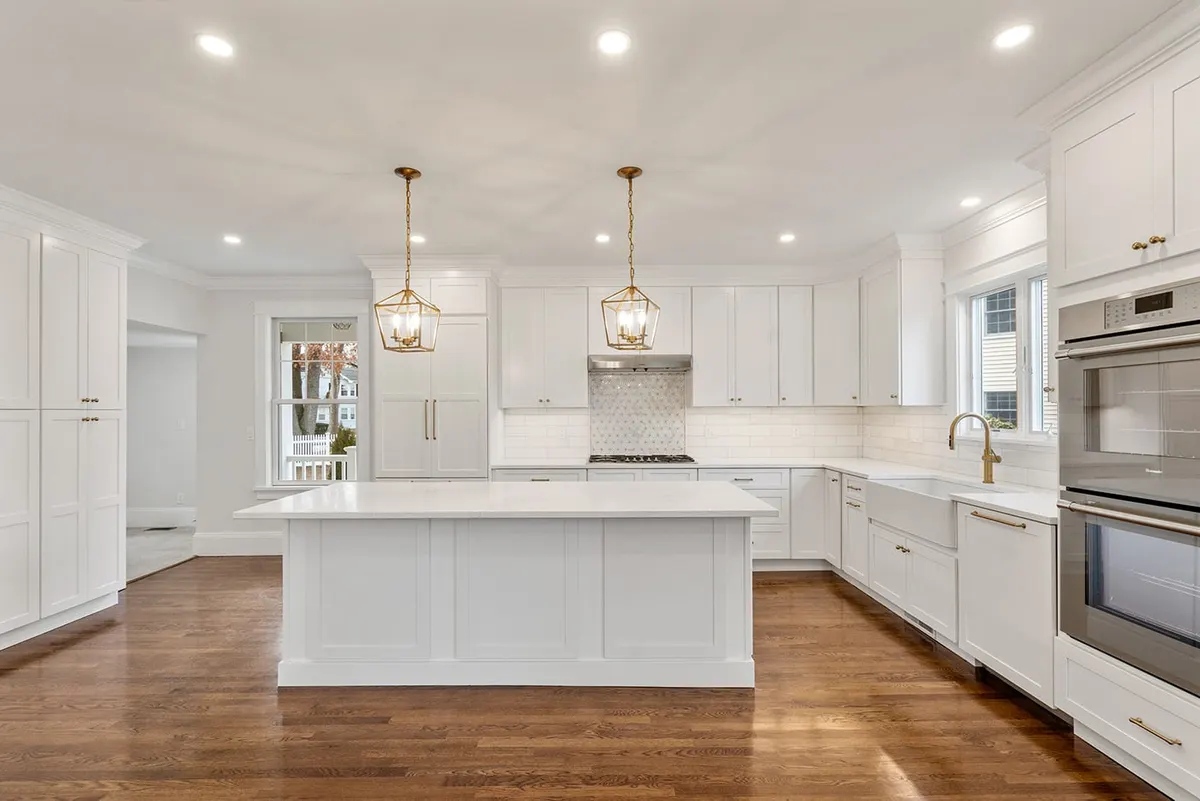
Choosing a cabinet color might sound like a simple decision, but it’s one of the most impactful choices you’ll make during a kitchen renovation. Cabinets typically account for roughly 40 percent of a kitchen’s visual footprint, which means the color you pick will set the tone for the entire space: from how large the room feels to how it makes you feel when you walk in each morning.
If you’ve been scrolling through Pinterest boards or visiting showrooms in the Waltham or Greater Boston area, you’ve probably noticed the conversation keeps coming back to the same debate: white kitchen cabinets vs dark cabinets: which is right for you?
The truth is, both options can look sharp when they’re done well. The right answer depends on your kitchen’s size, lighting, your lifestyle, and the mood you want to create. Let’s break it all down so you can make a decision you’ll love for years to come.
The Case for White Kitchen Cabinets
White cabinets have dominated kitchen design for decades, and there’s a reason they’ve held on this long. They’re not just a trend: they’re a foundation that works across nearly every design style.
They Make Your Kitchen Feel Bigger and Brighter
This is the number one reason homeowners choose white. Light colors reflect natural and artificial light, making a room feel more open and airy. If your kitchen is on the smaller side, doesn’t get a lot of natural light, or has a galley layout, all of which are common in older homes across Waltham, Watertown, and the Greater Boston area, white cabinets can make a meaningful difference in how spacious the room feels.
They’re the Ultimate Neutral
White pairs with virtually anything. Whether you want a dramatic black granite countertop, a colorful tile backsplash, warm brass hardware, or stainless steel appliances, white cabinets won’t compete. They let your other design choices take center stage, which gives you flexibility to update the look over time without replacing the cabinetry.
They Support Strong Resale Value
If selling your home in the next several years is even a possibility, white cabinets remain a safe investment. They appeal to the widest range of buyers because they act as a blank canvas. Potential buyers can easily picture their own style in a white kitchen, which is a significant advantage at open houses.
The 2026 Shift: Warmer Whites Are In
It’s worth noting that the all-white, clinical kitchen look is evolving. Designers in 2026 are moving toward warmer whites (think cream, linen, and soft greige tones) that still keep the room bright but feel more inviting and lived-in. If you love the idea of white but want something that feels a little softer, exploring these warmer shades is a smart move.
Brands like StarMark, Mid Continent, and Fabuwood (all available at Bay State Kitchen Gallery) offer a wide range of white and off-white finishes that let you find the exact right shade for your space.
The Case for Dark Kitchen Cabinets
On the other end of the spectrum, dark cabinets have been gaining serious momentum. Colors like charcoal, navy blue, matte black, espresso, and rich walnut stains are showing up in more kitchens, and for good reason.
They Add Instant Sophistication
Dark cabinets make a statement. They feel intentional, grounded, and refined in a way that white sometimes can’t achieve. When paired with high-contrast elements like a white marble countertop, brushed brass hardware, or warm wood open shelving, dark cabinetry creates a layered, designer-quality look.
They Create a Cozy, Intimate Atmosphere
Not every homeowner wants a bright, airy kitchen. Some prefer a space that feels warm and enveloping, especially if the kitchen doubles as the main gathering spot in the evening. Dark tones like midnight blue or deep charcoal create what designers call a “cocoon effect” that makes a kitchen feel like a retreat rather than a workspace.
They Hide Wear and Tear Better
Let’s be practical. White cabinets show every fingerprint, scuff, grease splatter, and stain. Dark cabinets, especially those with a matte finish, are far more forgiving in daily life. If you have young children, cook frequently, or simply don’t want to wipe down cabinet fronts every other day, darker shades offer a real maintenance advantage.
Natural Wood Stains Are Making a Comeback
One of the biggest trends heading into 2026 is the return of natural dark wood finishes. Rich walnut, dark-stained oak, and espresso tones bring warmth, texture, and organic character that painted cabinets can’t replicate. These finishes feel both timeless and modern, and they pair beautifully with lighter countertops and warm metallic accents.
Key Factors to Help You Decide
Still on the fence? Here are the practical considerations that should guide your choice:
Kitchen Size and Layout
In smaller kitchens, white or light-colored cabinets will almost always make the space feel larger. Dark cabinets in a compact kitchen can feel heavy unless you balance them with plenty of lighting and lighter surfaces elsewhere. If you have a spacious, open-concept kitchen with high ceilings and abundant natural light, dark cabinets can work well without closing the room in.
Natural Light
Take an honest look at how much sunlight your kitchen gets throughout the day. North-facing kitchens or rooms with small windows benefit greatly from lighter cabinetry. Kitchens that are flooded with natural light can handle dark tones beautifully: the light prevents them from feeling gloomy.
Your Lifestyle and Maintenance Tolerance
Be honest with yourself about how much upkeep you’re willing to do. White cabinets need more frequent cleaning to look their best. Dark matte finishes are more forgiving, though very dark cabinets can show dust. If low maintenance is a priority, consider a mid-tone or a textured wood finish that naturally conceals everyday wear.
Your Home’s Overall Style
Consider the architectural style of your home and the design direction of adjacent rooms. A Colonial in Waltham might lean toward classic white shaker cabinets, while a contemporary condo in Cambridge could be the perfect setting for sleek charcoal slab-front doors. The cabinets should feel like a natural extension of the home, not a mismatch.
Longevity and Resale
If you plan to stay in your home long-term, choose what you love. If resale is on the horizon, white and warm neutrals offer the broadest appeal. That said, a beautifully executed dark kitchen absolutely adds value: the key is quality materials and thoughtful design.
The Best of Both Worlds: Two-Tone Kitchens
If you can’t choose between white and dark cabinets, you might not have to. Two-tone kitchens are one of the most popular design approaches heading into 2026, and they offer a way to enjoy the benefits of both styles.
The most common approach is pairing lighter upper cabinets with darker lower cabinets or a dark-toned island. This creates visual depth and interest while keeping the space bright at eye level. It’s a particularly effective strategy for homeowners who want to experiment with darker tones without fully committing.
Another option is combining white painted cabinets with natural wood accents: for example, a white perimeter kitchen with a walnut island. This adds warmth and texture without giving up the openness that white provides.
When you visit the Bay State Kitchen Gallery showroom, you can see two-tone combinations in person and work with our design team to find the pairing that works best for your space.
What We’re Seeing in Waltham and Greater Boston
Our team at Bay State Kitchen Gallery works with homeowners across Waltham, Newton, Brookline, Lexington, and the broader Greater Boston area every day. Here’s what we’re seeing locally:
White shaker cabinets remain the most popular choice for families who want a clean, timeless look, especially in homes built before the 1960s where kitchen square footage tends to be modest.
Dark and two-tone kitchens are growing fast, particularly in open-concept renovations and newer construction where there’s more room to work with.
Warmer finishes are replacing cool grays. The cool gray cabinet trend has peaked. Homeowners are shifting toward cream whites, warm taupes, and natural wood tones.
Matte finishes are overtaking glossy. Whether white or dark, matte and satin finishes feel more current and are easier to maintain day-to-day.
How to Get Started
The best way to choose between white and dark cabinets isn’t staring at your phone screen: it’s seeing and touching real samples in person. Cabinet colors look different depending on your kitchen’s lighting, your countertop choice, your flooring, and even the paint on your walls.
At Bay State Kitchen Gallery, we carry top cabinetry brands including StarMark, Europa, Mid Continent, Fabuwood, and Elleganza, each offering a wide range of finishes from bright whites to deep darks and everything in between. Our design team will help you compare options side by side and visualize how they’ll look in your actual kitchen.
Visit our Waltham showroom or call us at (617) 214-1839 to schedule a consultation. We’ll help you find the perfect cabinets for your style, your space, and your budget.
Frequently Asked Questions
Are white kitchen cabinets going out of style?
No. White cabinets remain the most popular choice nationally, though the trend is shifting from stark, cool whites toward warmer tones like cream, linen, and soft greige. White isn’t going away: it’s simply evolving to feel less clinical and more inviting.
Do dark cabinets make a kitchen look smaller?
They can if the room is small and doesn’t have much natural light. However, in larger or well-lit kitchens, dark cabinets actually add depth and dimension. Pairing dark lower cabinets with lighter uppers or light countertops helps offset any heaviness.
What is a two-tone kitchen?
A two-tone kitchen uses two different cabinet colors or finishes: for example, white upper cabinets with a navy island, or cream perimeter cabinets with a walnut-stained base. It’s a way to add visual interest and personality without going fully dark or fully light.
Which cabinet color has better resale value?
White and warm neutral tones generally offer the broadest appeal at resale. However, a well-designed dark or two-tone kitchen with high-quality materials can be equally attractive to buyers. The quality of the cabinetry and overall design matters more than the specific color.
What cabinet finish is easiest to maintain?
Matte and satin finishes hide fingerprints and minor scuffs better than high-gloss options. Mid-tones and textured wood finishes tend to be the most forgiving overall. Stark white and very dark solid colors show smudges and dust more readily.
How do I know which color is right for my kitchen?
Start by evaluating your kitchen’s size, natural light, and the style of your home. Then visit a showroom to see real samples under different lighting. Working with a kitchen design team (like the experts at Bay State Kitchen Gallery) ensures you’ll get personalized guidance based on your actual space, not just trend articles.