
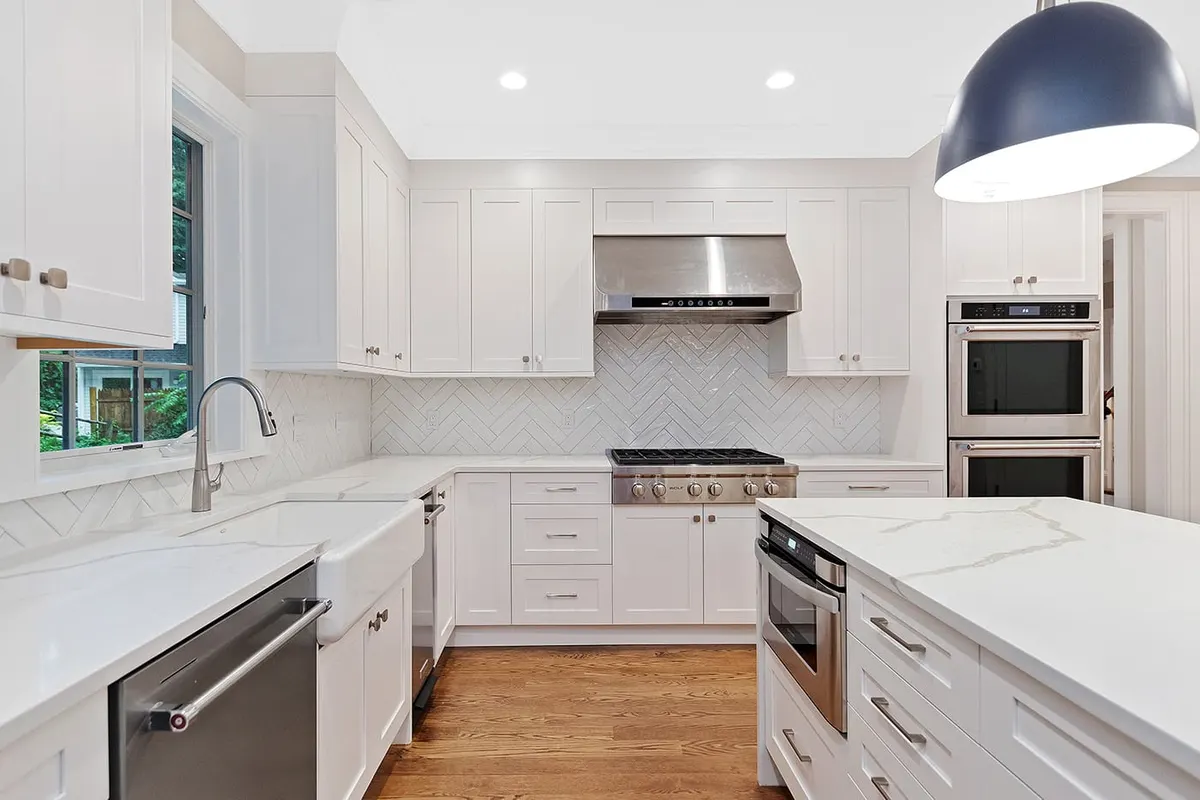
A kitchen remodel is one of the most rewarding investments you can make, but it’s also one of the easiest projects to get wrong. Between layout decisions, material choices, and cabinet selection, a single misstep can cost you thousands.
At Bay State Kitchen Gallery, we’ve helped homeowners across Waltham and the greater Boston area plan kitchen renovations for years. We’ve seen the same kitchen remodel mistakes come up again and again: all entirely avoidable with the right planning.
Whether you’re updating a galley kitchen in a pre-war Waltham colonial or doing a full gut renovation in Newton, this guide covers the most common and costly kitchen remodel mistakes so you can avoid every one of them.
1. Skipping the Planning Phase and Rushing Into Demolition
The excitement of a new kitchen is real. You’ve been browsing Pinterest and mentally ripping out those dated oak cabinets for months. But one of the biggest kitchen remodel mistakes homeowners make is jumping straight into demolition before the design is fully locked down.
A kitchen renovation involves plumbing, electrical, cabinetry, countertops, flooring, lighting, ventilation, and appliances: all of which need to work together as a system. Changing your mind about the layout after the plumber has already roughed in new lines can add thousands to the budget.
What to do instead: Invest the time upfront to finalize your layout, select your materials, and confirm appliance dimensions before any work begins. A design-build process, where planning and construction are managed under one roof, helps prevent costly change orders down the line.
2. Choosing Cabinets Based on Looks Alone
This is one of the most common kitchen remodel mistakes we see at our Waltham showroom. Cabinet doors are the most visible element in your kitchen, so it’s natural to focus on style first. But construction quality is what determines whether your cabinets will still feel solid in ten or fifteen years.
Here’s what to look for beyond the door style:
Box construction: plywood boxes resist moisture and last significantly longer than particleboard.
Drawer slides: soft-close, full-extension slides let you access the entire depth of each drawer.
Dovetail drawer joints: interlocking joints far stronger than stapled or glued connections.
Hinge quality: soft-close hinges eliminate slamming and reduce wear on the frame.
A beautiful shaker door on a particleboard box with bottom-tier hardware is a recipe for regret. The best approach is to visit a showroom where you can open drawers, test hinges, and feel the difference between construction grades firsthand.
3. Ignoring the Work Triangle and Kitchen Workflow
Your kitchen’s layout determines how efficiently you can cook, clean, and move through the space every single day. Yet many homeowners spend more time choosing backsplash tile than thinking about how the sink, stove, and refrigerator relate to each other.
The kitchen work triangle, the principle that your three main work areas should be positioned in close proximity without obstructions, has been a design standard for decades. When these zones are too far apart or blocked by an oversized island, even simple tasks become inefficient.
This is especially relevant in older Massachusetts homes, where original kitchen footprints can be narrow or awkwardly divided by load-bearing walls. In Waltham’s older neighborhoods, particularly the colonials near Prospect Hill, layouts often need creative problem-solving to achieve good flow.
What to do instead: Before selecting a single finish or material, map out your workflow. Walk through a typical cooking session mentally: Where do you set groceries? Where do you prep? Where does the trash go?
4. Underestimating Your Storage Needs
Lack of proper storage is one of the most frequently cited kitchen remodel regrets. It’s easy to focus on how the kitchen looks and forget you need functional space for pots, pans, baking sheets, small appliances, and everyday dishes.
Standard base cabinets with fixed shelves leave a surprising amount of unusable dead space. Corner cabinets become black holes where Tupperware lids go to disappear.
Smarter storage solutions to consider:
Pull-out pantry shelves that let you see and reach everything at a glance
Deep drawers for pots, pans, and heavy cookware
Vertical dividers for baking sheets, cutting boards, and trays
Pull-out trash and recycling units built into the cabinetry
These features are easiest and most cost-effective to include during the initial remodel rather than retrofitting later.
5. Setting an Unrealistic Budget (or No Budget at All)
Walking into a kitchen remodel without a clear budget is a guaranteed path to stress. Kitchens have more moving parts than almost any other renovation: cabinetry, countertops, flooring, appliances, plumbing, lighting, labor, and every category has a wide price range.
One of the most expensive kitchen remodel mistakes is spending the bulk of your budget in one area and cutting corners everywhere else. Investing heavily in a professional-grade range while settling for the cheapest cabinets creates an imbalance that shows in daily use.
A smarter budgeting approach: Cabinets typically account for 30 to 40 percent of a total kitchen remodel budget. Allocate funds proportionally and build in a 15 to 20 percent contingency for unexpected costs, because in older homes, there are always surprises behind the walls.
6. Neglecting Ventilation
Ventilation is one of the most overlooked elements in kitchen remodeling. Homeowners will spend weeks agonizing over countertop materials and barely give the range hood a second thought. But inadequate ventilation leads to lingering cooking odors, grease buildup on cabinets, excess moisture, and potential long-term issues like mold.
Over-the-range microwaves are one of the worst offenders. They’re only about 16 inches deep, meaning they don’t effectively capture smoke and grease from the front burners. A dedicated range hood with adequate CFM rated for your cooktop protects both your health and your new kitchen finishes.
7. Choosing Trendy Finishes Over Timeless Ones
That bold, colorful mosaic backsplash or ultra-trendy cabinet color might look sharp on Instagram today, but kitchens are long-term investments. Unlike paint or throw pillows, cabinets and countertops aren’t cheap to swap out when the trend passes.
We’ve seen this cycle play out in the Waltham and greater Boston market repeatedly. Tuscan-inspired kitchens from the early 2000s. The all-gray-everything phase. Heavily veined countertops that dominated Pinterest for a few years. Each looked fresh at the time, but many homeowners now wish they’d chosen something more restrained.
What holds up: Warm whites, natural wood tones, shaker-style doors, and neutral stone countertops. If you want trendy colors, use them in easily replaceable elements: hardware, light fixtures, and barstools, rather than permanent features.
8. Not Coordinating Materials Together
Choosing your cabinets, countertops, flooring, and backsplash independently, at different stores, under different lighting, almost always results in a kitchen that doesn’t feel cohesive. Warm-toned cabinets paired with cool-toned flooring, or a busy countertop competing with a busy backsplash, are mistakes that become immediately visible once installed.
This is why seeing and selecting materials together matters. At Bay State Kitchen Gallery, homeowners can compare cabinet finishes, door styles, and countertop samples side by side under real lighting: making it far easier to build a cohesive palette than bouncing between five different suppliers.
9. Hiring the Wrong Contractor
Not every contractor is the right fit for a kitchen remodel. Kitchens require coordination across multiple trades: carpentry, plumbing, electrical, tile, and more. Hiring the lowest bidder without verifying credentials is one of the most damaging kitchen remodel mistakes.
Before signing any contract, verify:
State license and insurance (Massachusetts requires HIC registration)
Kitchen-specific portfolio and references
Written contract with clear scope, timeline, and change-order policy
10. Forgetting About Lighting
Many homeowners treat lighting as an afterthought: picking a single overhead fixture and calling it done. But kitchens need layered lighting to function well: task lighting over prep zones, ambient lighting for general illumination, and accent lighting for design features.
Under-cabinet lighting alone makes a dramatic difference in both functionality and aesthetics. It illuminates your countertops where you actually work and eliminates shadows cast by upper cabinets. Plan your electrical layout to accommodate multiple lighting zones before drywall goes up: adding circuits after the fact is expensive and disruptive.
Plan Your Kitchen Remodel the Right Way
Every one of these kitchen remodel mistakes is avoidable with thoughtful planning, quality materials, and the right guidance. The difference between a kitchen you love for decades and one that frustrates you daily comes down to decisions made before demolition day.
If you’re planning a kitchen remodel in Waltham or anywhere in the greater Boston area, visit the Bay State Kitchen Gallery showroom. Our designers help you navigate cabinet selection, material coordination, and layout planning so you can invest with confidence. Schedule a showroom visit or call us at (617) 214-1839 to start planning your kitchen remodel today.
Frequently Asked Questions About Kitchen Remodeling
What is the biggest mistake people make when remodeling a kitchen?
The single biggest mistake is rushing into the project without a finalized plan. Mid-project changes, known as change orders, inflate kitchen remodel costs by an average of 10 percent. Locking down your layout, materials, and budget before demolition begins prevents the most expensive surprises.
How much should I budget for a kitchen remodel?
In the Waltham and greater Boston area, a mid-range kitchen remodel typically costs between $30,000 and $75,000, while high-end renovations can exceed $100,000. Cabinets alone account for 30 to 40 percent of the total budget. Always build in a 15 to 20 percent contingency, especially in older Massachusetts homes where hidden issues are common behind the walls.
Is it worth it to get custom kitchen cabinets?
Custom cabinets are worth the investment if you have an unusual layout or want a specific aesthetic. However, semi-custom cabinets offer a strong balance of flexibility and value: they allow modifications to width, depth, and height at a fraction of the custom price. Visiting a showroom to compare construction grades side by side is the best way to determine which option fits your project.
How long does a kitchen remodel take?
A typical kitchen remodel takes 6 to 12 weeks once construction begins, depending on scope. However, the planning and design phase, selecting cabinets, finalizing the layout, ordering materials, can add another 4 to 8 weeks. Cabinet lead times alone can run 3 to 4 months for semi-custom and custom orders, so starting early is critical.
Should I remodel my kitchen before selling my house?
A well-executed kitchen remodel often recoups 60 to 80 percent of costs at resale. The key is making broadly appealing choices: neutral finishes, quality cabinetry, durable countertops, and modern appliances. If a full remodel isn’t in the budget, targeted upgrades like new cabinet doors, hardware, and countertops can significantly refresh the space.