
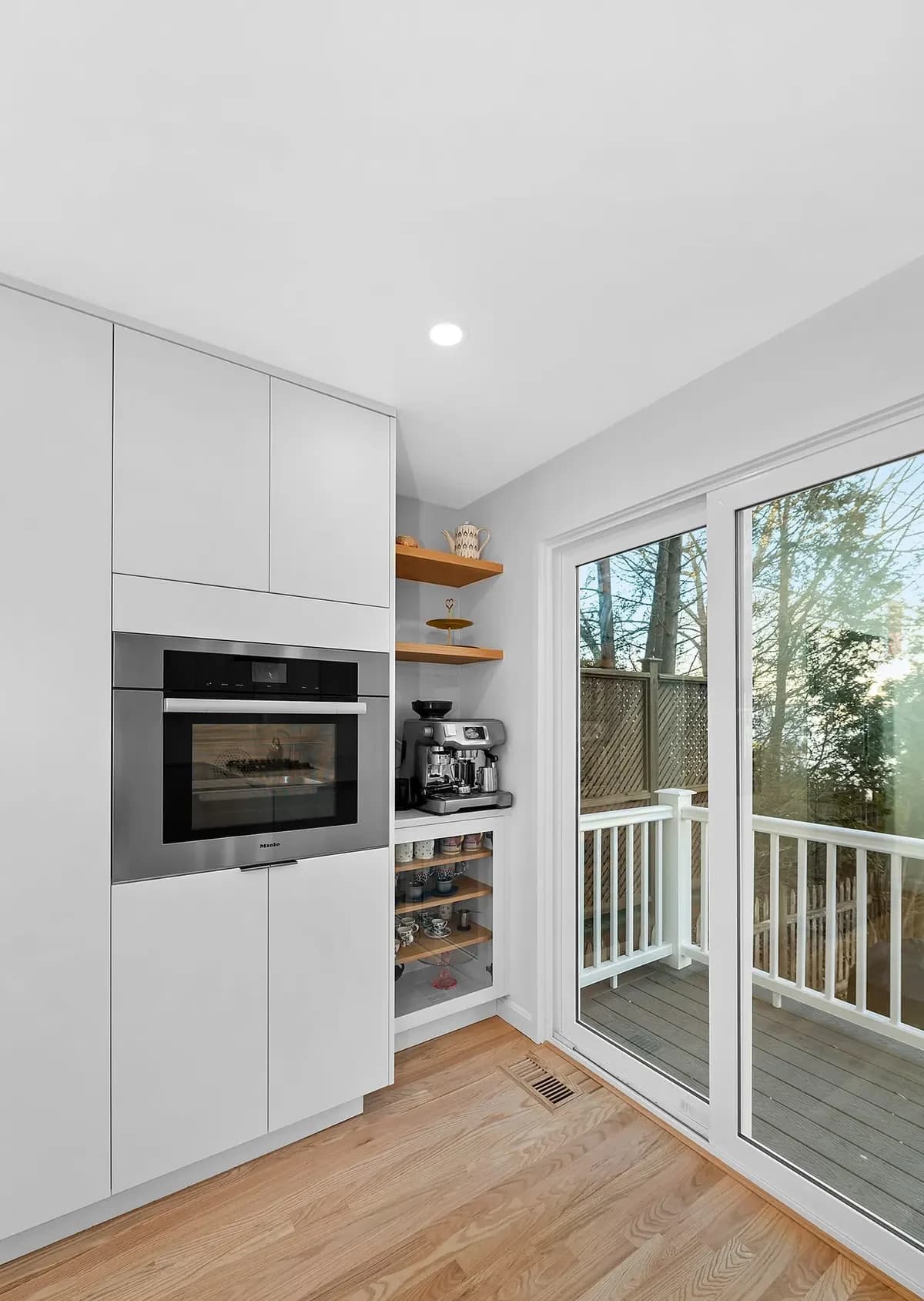
The decision to design a kitchen for long-term accessibility is one of the most financially and practically intelligent investments a Waltham homeowner can make. Aging-in-place kitchen design does not mean clinical, institutional, or compromise. Done well, it means a kitchen that works better for everyone in the household today while building in the safety and accessibility features that will matter increasingly as years pass. It also adds measurable resale appeal in a Massachusetts market where a significant and growing portion of buyers actively seek homes with these features already installed.
Bay State Kitchen Gallery designs aging-in-place kitchens for Waltham homeowners who are planning ahead thoughtfully. This guide covers the specific features that make the most difference, how they fit into a standard kitchen renovation scope, what they cost, and how they affect both daily function and long-term property value.
Why Plan for Aging in Place Now?
The most effective time to incorporate aging-in-place features into a kitchen is during a planned renovation, when the additional cost of accessible design is incremental rather than the primary cost driver. Adding a pull-out drawer system to a cabinet order costs a fraction of retrofitting it later. Designing a wider pathway into the kitchen plan costs nothing if it is considered at the layout stage. Planning for an accessible counter height during the design phase adds minimal cost compared to modifying cabinetry after installation.
In Waltham and the surrounding Greater Boston area, the demographic trend is clear. Massachusetts has one of the highest proportions of homeowners over 60 in New England, and the preference for aging in the family home rather than transitioning to assisted living facilities is consistently strong in surveys of this age group. A kitchen that supports that preference is both a lifestyle investment and a financial one.
The Features That Make the Most Difference
The Highest-Impact Individual Changes
Pull-out base drawers are the single most impactful accessibility upgrade in any kitchen because they eliminate the need to bend deep into a lower cabinet to retrieve pots, pans, or stored items. The ergonomic benefit is immediate and daily for every member of the household regardless of age. In a kitchen renovation, specifying full-extension drawers instead of shelves in base cabinets adds modest cost and dramatically improves daily function.
Wider clearance pathways are a planning decision that costs nothing if incorporated at the layout stage. A pathway that accommodates a wheelchair or walker (36 to 48 inches minimum) also makes the kitchen more comfortable for multiple people working simultaneously. Designing for this clearance from the beginning is far preferable to discovering later that the kitchen cannot be navigated safely with a mobility aid.
Task lighting under upper cabinets directly addresses one of the most common safety issues in older kitchens: inadequate illumination for food preparation tasks. A kitchen where the prep surface is poorly lit is a genuine hazard. Under-cabinet LED lighting is one of the least expensive and most universally beneficial upgrades in any kitchen renovation.
Design Principles That Apply Throughout
Aging-in-place kitchen design is governed by a set of universal design principles that happen to make kitchens better for every user, not just those with mobility limitations or vision changes.
Contrast at transition points: A visible contrast between the countertop edge and the cabinet below it, or between the floor and the cabinetry, helps orient users with reduced vision
Controls at accessible heights: Microwave drawers, ovens at counter height, and refrigerators without low-mounted freezer drawers all reduce the need for bending or reaching above shoulder height
Consistent and predictable layout: A kitchen where the workflow is logical and predictable reduces cognitive load for everyone and supports independent use for longer
Knee clearance under the sink: A sink area designed with removable cabinet doors or an open base allows wheelchair access to the sink surface; this is a relatively minor design decision with significant long-term value
The broader design approach that governs these decisions aligns with the direction that kitchen design is already moving in 2026. Our overview of current kitchen design trends covers how accessibility-forward features are increasingly integrated into mainstream kitchen design rather than treated as a separate category.
Cabinet Style and Material Choices for Aging-in-Place Kitchens
The best aging-in-place kitchen is one that does not look like an aging-in-place kitchen. The goal is to build accessibility into a design that is beautiful and appears intentional rather than adapted. Cabinet style selection plays a key role in this. Shaker cabinets are the most widely chosen profile for accessible kitchen designs because their clean, practical aesthetic is compatible with pull-out drawer systems, lever hardware, and open base sink areas without looking clinical or commercial.
Countertop selection also matters. A consistent countertop height with no abrupt transitions is safer and more accessible than a kitchen with multiple different countertop levels. When a lowered prep section is incorporated, the transition between heights should be designed carefully and edged with a rounded profile rather than a sharp 90-degree edge. Quartz is the most popular countertop choice for accessible kitchens because it is non-porous, requires no sealing, and is available with rounded edge profiles that are safer and more comfortable at accessible countertop heights.
Resale Value of Aging-in-Place Features in Waltham, MA
Aging-in-place features have historically been perceived as neutral or slightly negative from a resale perspective, because they signal to some buyers that the home was modified for a specific need rather than designed with universal quality. That perception has shifted meaningfully in recent years.
In the Waltham and Greater Boston market, buyers in the 50-plus age bracket actively seek homes where accessibility features are already in place. This demographic represents a large and financially capable segment of the Massachusetts buyer pool, and a kitchen that already incorporates pull-out storage, accessible pathway widths, and excellent task lighting is genuinely valued by these buyers. A kitchen designed with universal design principles looks intentional and considered to buyers of every age.
Ready to Plan Your Aging-in-Place Kitchen in Waltham, MA?
The best time to incorporate aging-in-place features into your kitchen is during a renovation you are already planning. Bay State Kitchen Gallery designs accessible kitchens in Waltham that look beautiful, function for every member of the household, and add long-term value to the property.
Our design consultations address both the aesthetic and the functional goals of your kitchen renovation, with specific expertise in universal design principles and their application in the homes common to the Greater Boston area.
Schedule Your Free Kitchen Design Consultation at Bay State Kitchen Gallery and let us show you what an aging-in-place kitchen looks like when it is designed to be both accessible and beautiful.
Frequently Asked Questions About Aging-in-Place Kitchen Design
What is aging-in-place kitchen design?
Aging-in-place kitchen design incorporates features that allow a homeowner to continue using their kitchen safely and independently as their physical capabilities change over time. It draws on universal design principles to create a kitchen that works well for users of all ages and abilities, rather than requiring modifications later when specific needs arise.
How much does it cost to add aging-in-place features to a kitchen renovation?
The incremental cost of adding aging-in-place features during a planned renovation is relatively modest. Specifying pull-out drawers instead of shelves in base cabinets adds $200 to $800 per cabinet at the time of cabinet ordering. Planning wider pathways costs nothing during the layout phase. Under-cabinet task lighting adds $200 to $600 for the full kitchen. The total incremental cost for a comprehensive set of accessible features in a mid-range renovation typically runs $2,000 to $8,000 above a standard renovation of the same scope.
Do aging-in-place kitchens look different from standard kitchens?
Not when designed well. The goal of good universal design is to build accessibility into a kitchen that looks and feels like a premium standard kitchen. Pull-out drawers, lever hardware, and under-cabinet lighting are all features that enhance the kitchen for every user. Wider clearance pathways make the kitchen more comfortable for multiple people. None of these features announces itself as an adaptation.
What is the most important aging-in-place feature in a kitchen?
Pull-out base cabinet drawers consistently deliver the most daily value because they make every lower cabinet item easily accessible without bending or reaching into a deep cabinet. This benefits users of every age and reduces the risk of injury during routine cooking and storage tasks. If budget allows only one aging-in-place upgrade, full-extension drawers in base cabinets deliver the highest return.
Does Medicare or insurance cover aging-in-place kitchen modifications in Massachusetts?
In general, cosmetic kitchen modifications for accessibility are not covered by Medicare or standard homeowner’s insurance. Some Massachusetts state programs and grants exist for income-qualifying homeowners making accessibility modifications. Bay State Kitchen Gallery can provide documentation of specific modifications for homeowners who are pursuing any available reimbursement or grant programs.
Design It Right the First Time
An aging-in-place kitchen that is designed thoughtfully from the beginning serves every member of the household better today and ensures the home remains functional and safe for decades to come. Bay State Kitchen Gallery brings both the design expertise and the practical knowledge of accessible kitchen features to every Waltham renovation consultation. Contact us today and let us plan a kitchen that works beautifully for your whole life.