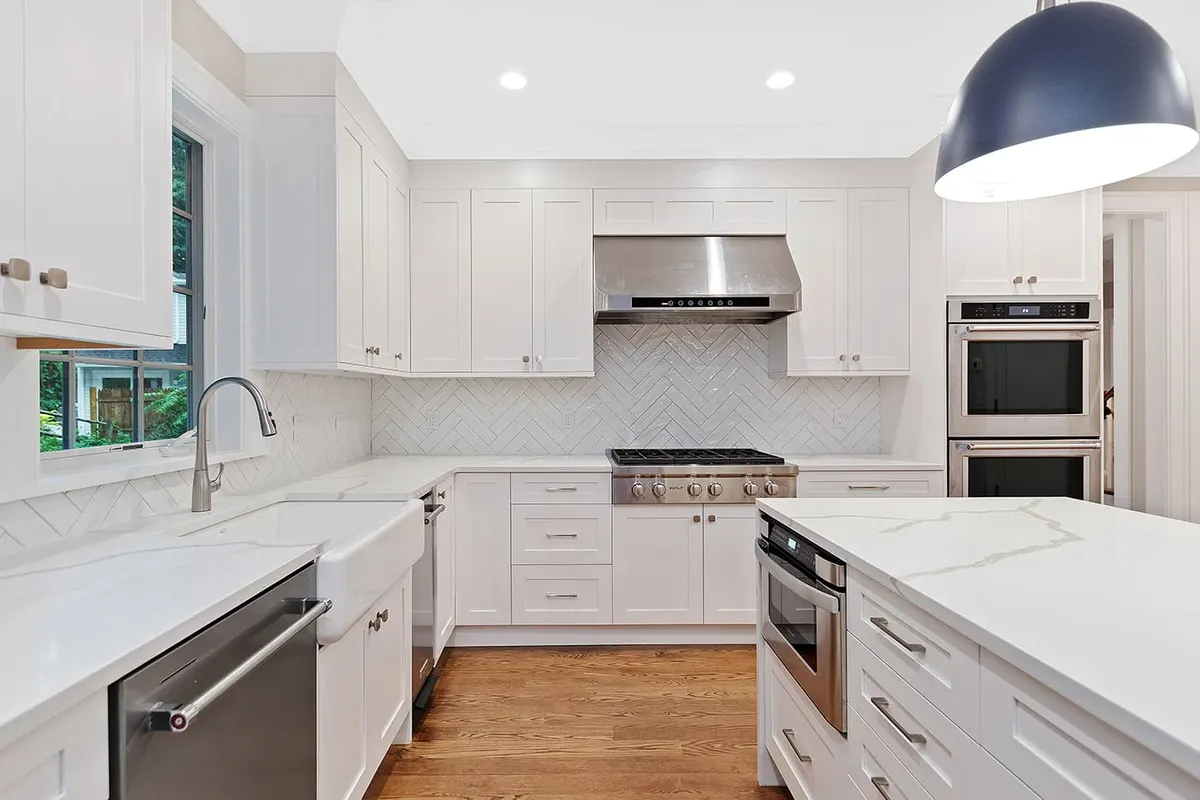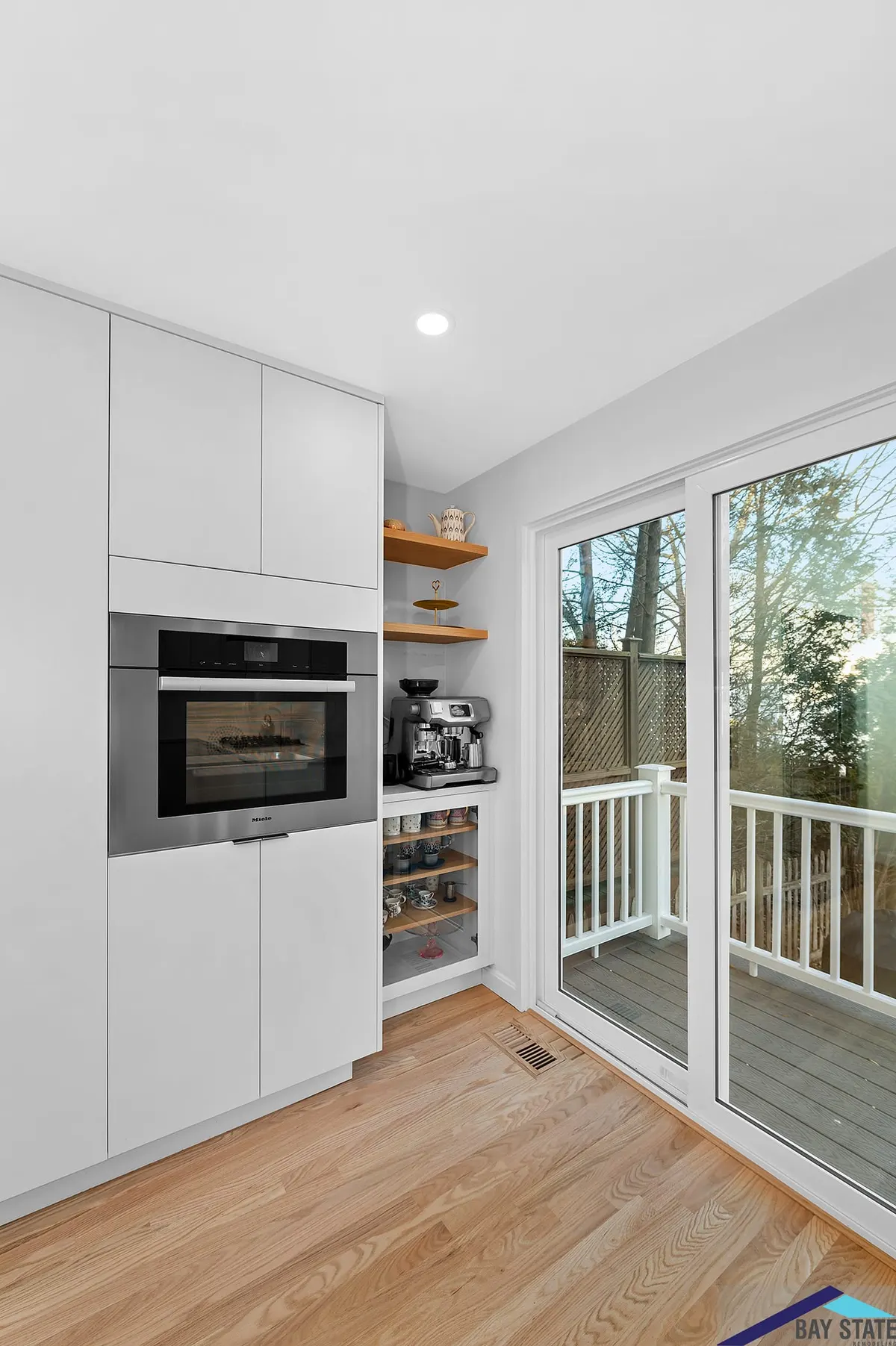
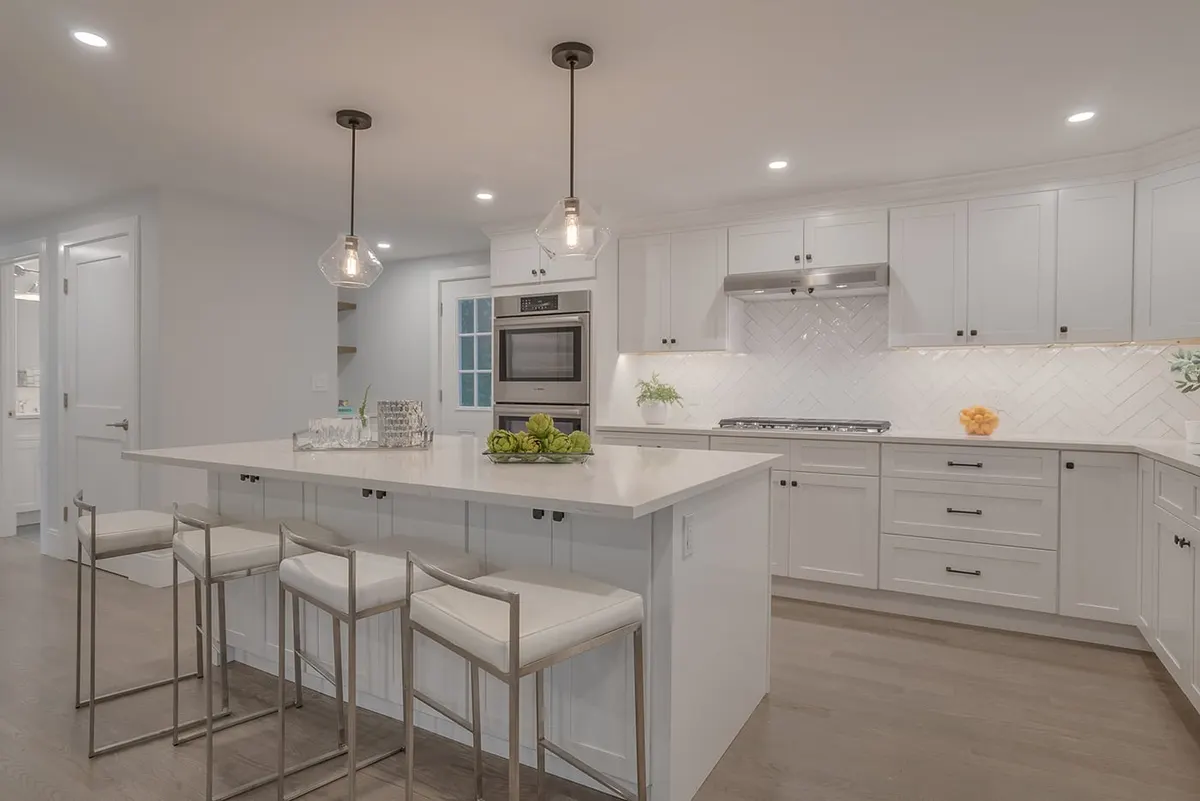
White oak has been the most-asked-for wood species in our showroom for five straight years. It takes stain beautifully, holds paint cleanly, and has a tight grain that reads less busy than red oak. The question we get next is always the same: do we paint it or stain it. The short answer is that both paint and stain have a three-year look, a ten-year look, and a twenty-year look, and the honest way to pick is to know what each of those looks like.
Year one: both look good
Painted white oak in year one is crisp. The grain is filled, the paint is even, the door edges are sharp. Stained white oak in year one is warm and a little under-developed in tone; oak takes about a year for the oils to settle into the finish and for the color to deepen half a shade.
Year three: paint wins on look, stain wins on wear
At year three, painted cabinets still read new. The finish on a factory-sprayed Fabuwood Allure door at year three is close to indistinguishable from year one, if nobody has hit it with the corner of a chair. Stained white oak at year three has settled into its deeper tone and started showing its fine grain more clearly. It looks less new, which in an older house is a compliment.
Wear tells a different story. Stained oak hides a scratch. A ding that takes a chip of stain off leaves a small light mark that is usually not noticeable across the room. The same ding on a painted cabinet takes a flake of paint off and shows the raw wood underneath, which is noticeable. If the kitchen is the main traffic corridor in the house (and it usually is), painted doors need touch-up care more often than stained.
“Stained white oak hides life. Painted white oak shows it, for better and for worse.”
Year ten: the honest pivot
This is where the two diverge. A well-specified painted kitchen at year ten, with a factory-sprayed two-part conversion varnish, still looks mostly clean. You will see wear at the pull zones and the toe kicks. A field-painted kitchen at year ten shows more wear. The stained kitchen at year ten has developed a patina that is almost impossible to distinguish from a well-kept oak kitchen from the 1940s. Some clients love this. Others decide it looks tired.
If you plan to stay in the house for ten or more years, this year-ten look is the one to stare at. We can show you both in our showroom. We keep a Mid Continent painted sample and a Fabuwood Galaxy Timber stained sample on the bench, and we have clients bring theirs in at year ten for comparison.
Year twenty: refinishability
At year twenty, every kitchen looks like it has lived a life. The question is which one is easier to bring back. Stained cabinets can be scuff-sanded and re-coated in place. Painted cabinets are harder to touch up without a full spray booth, because the blend line shows. If your plan is to refresh the kitchen at year fifteen or twenty rather than rebuild it, stain gives you a cheaper path.
A practical rule we use
If the household includes kids, dogs, or a busy cook who leans hard on a corner, we quietly steer toward stain. If the kitchen is the one showcased room in the house and the owner is careful, we quietly steer toward paint. If you are genuinely torn, we will put a painted upper sample and a stained base sample in the same run at the install; a two-tone mix is a legitimate answer, not a compromise. We have specified half a dozen two-tone white oak kitchens in the last two years and every one of them reads as intentional.