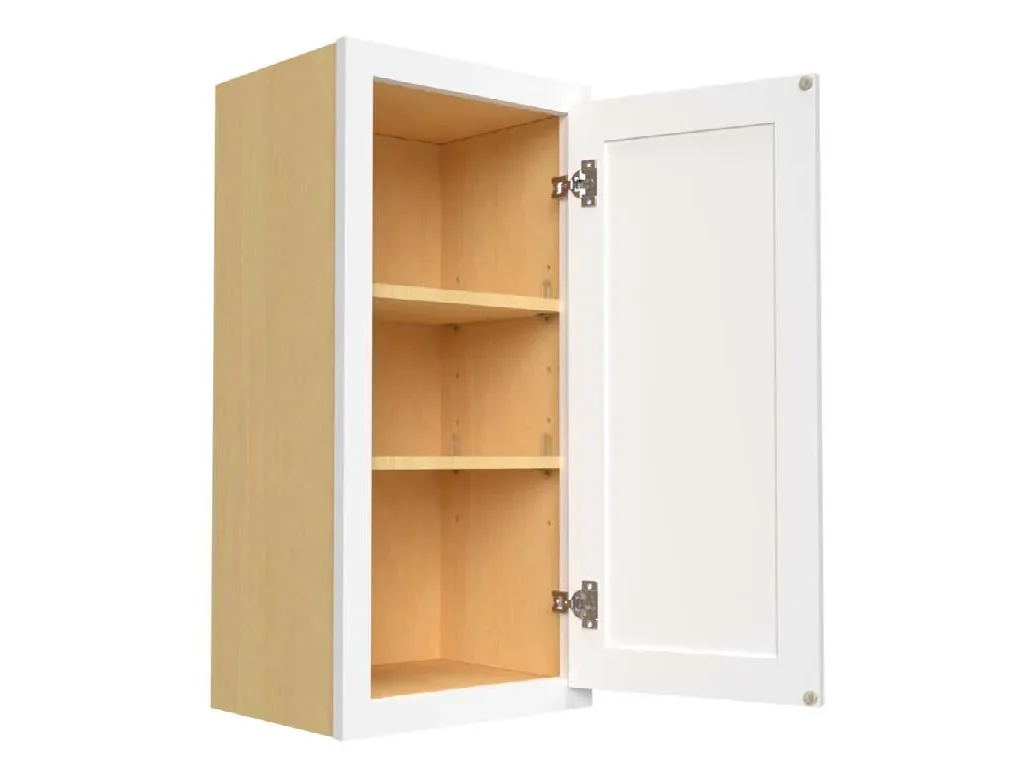
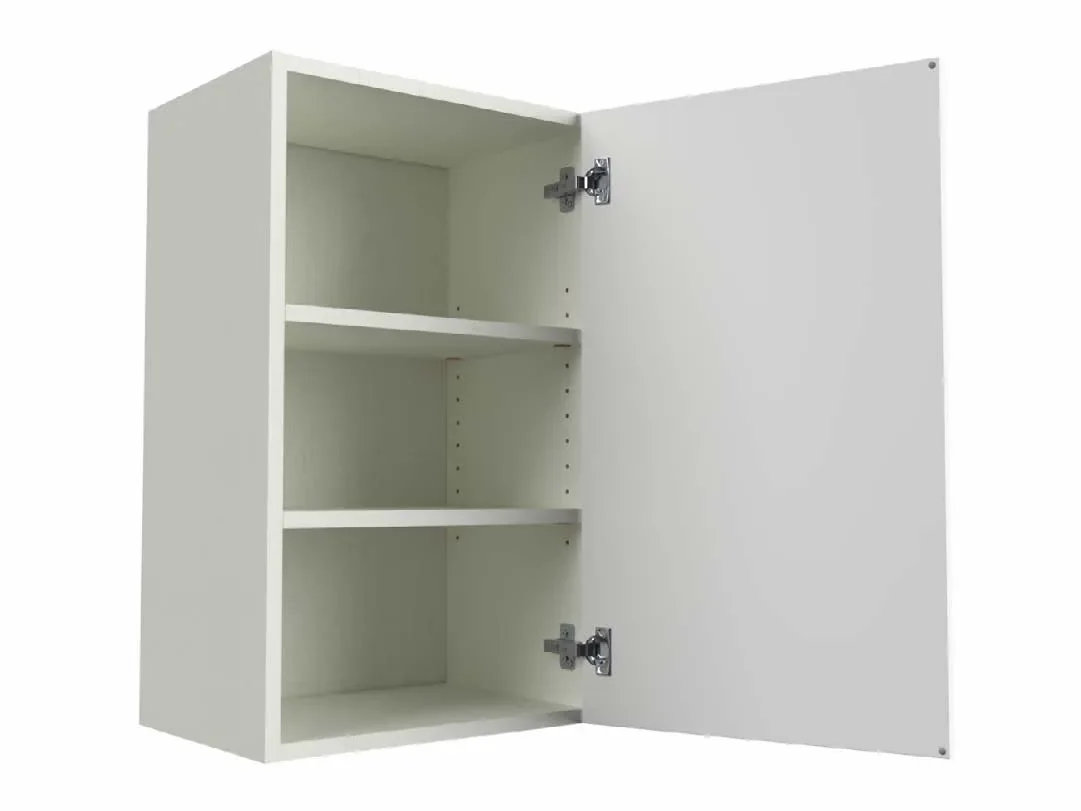
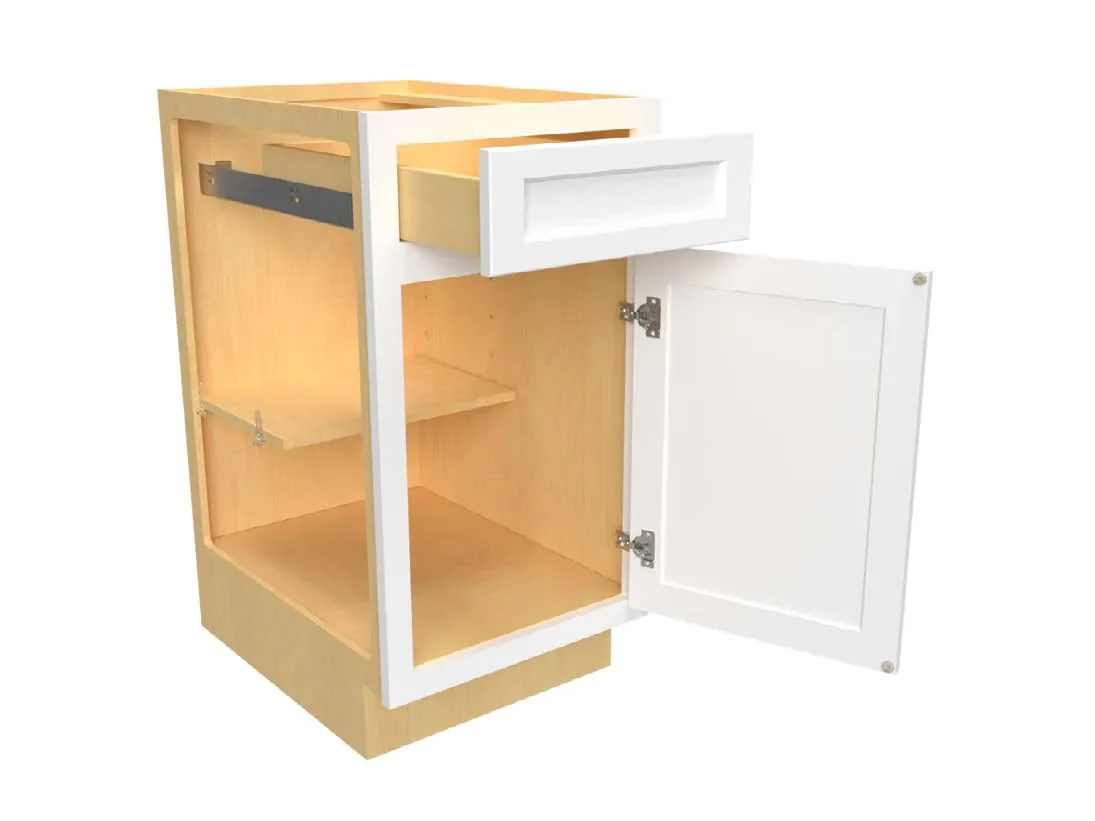
Drag the handle to look inside. Tap the dots for close-ups. Then walk the Seven Criteria plus Warranty: slide each one from Good to Better to Best and watch the explanation and the price impact change together.
See what you’re paying for
One cabinet. A closer look.
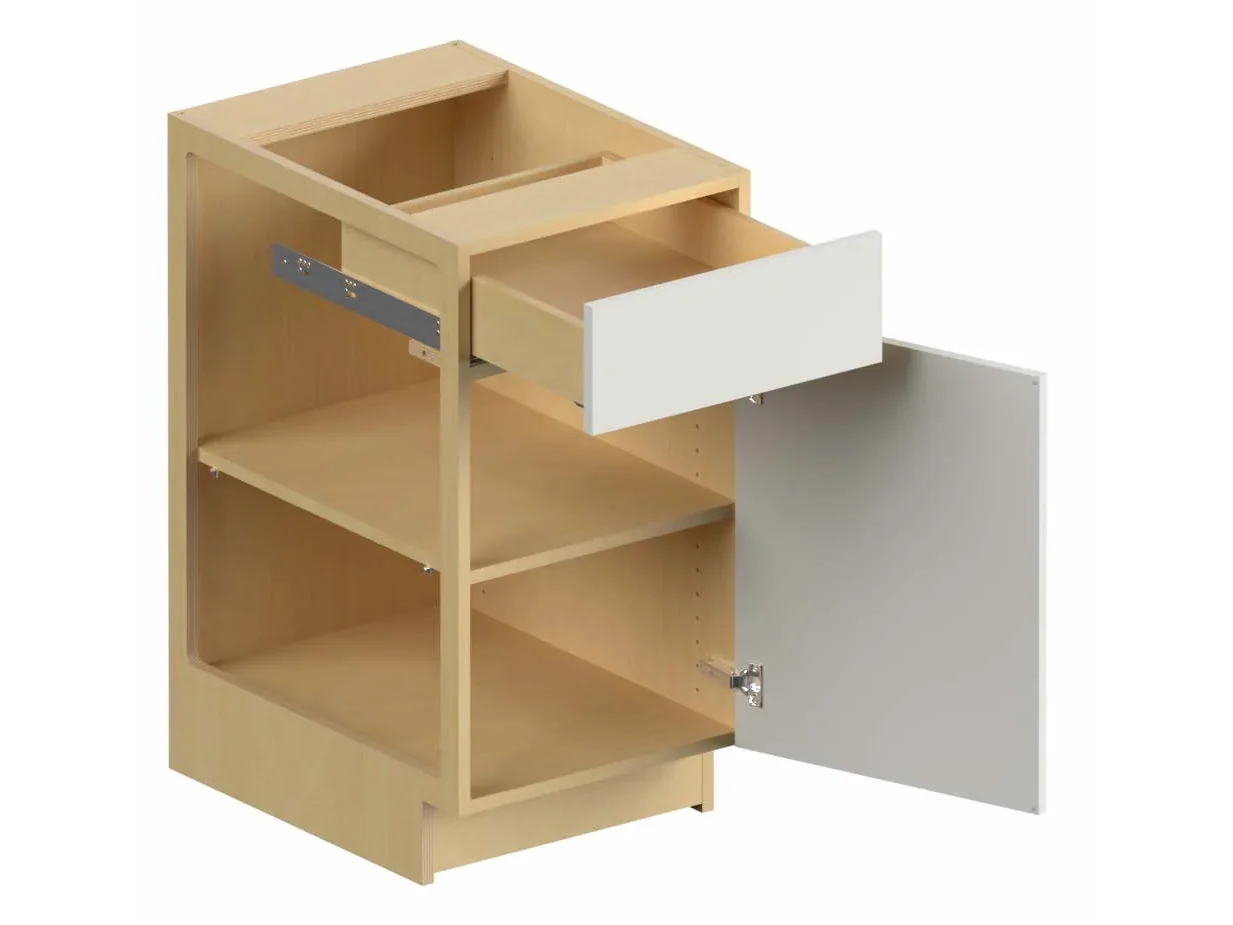
Drag to the right to see through the finish. The cabinet stays in place as its sides, shelf and back come into view.
Inside the boxThe finished cabinet
‹›
58% revealed
Finished cabinetInside the box
Look beneath the finish
Good looks are the beginning.
The box does the everyday work. Reveal it, then tap a numbered detail to understand what to compare when you choose your cabinets.
The dots describe the Pivot construction example. Materials and details vary across cabinet lines.
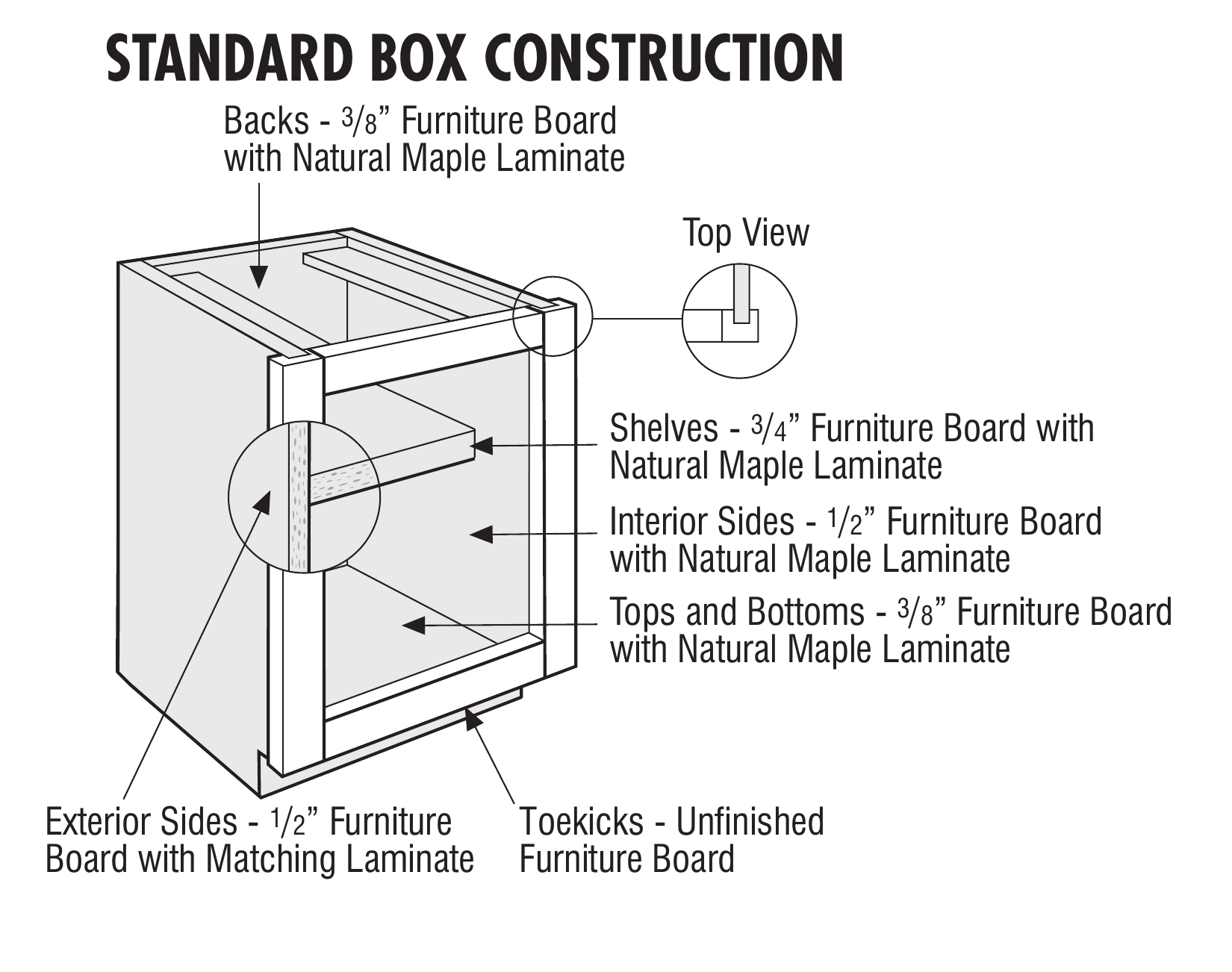
One aligned illustration, based on a framed cabinet box. The green finish and door are illustrative; this is not a product rendering or an exact SKU.
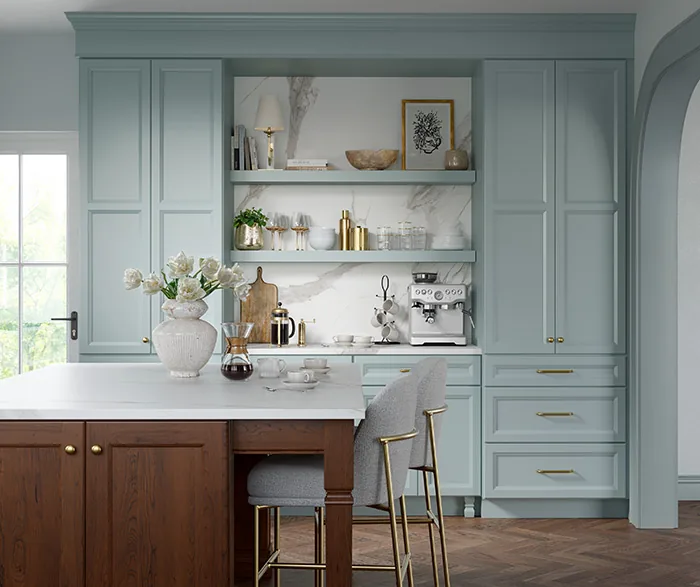
See the original drawing and a real kitchen
Source: Mid Continent Pivot standard drawing, p.29. Tap the drawing to read the original specifications at full size.Source: Mid Continent brochure, p.24. A real finished kitchen for inspiration; not this exact cabinet.
Look inside · a cabinet construction study
See what the finish hides.
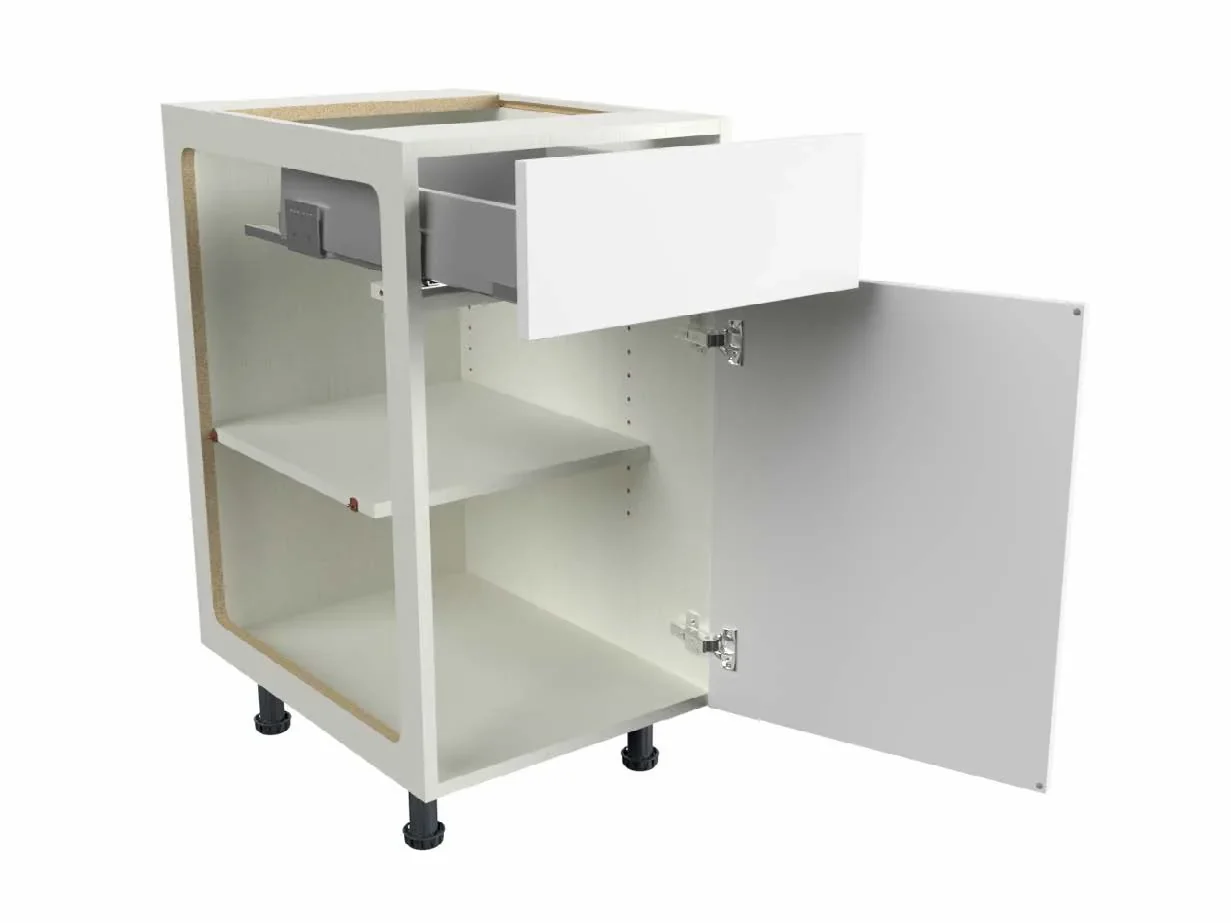
Open the door, pull the drawer, then remove a side to see how the box, shelf and hardware work together. Compare a face frame with a full-access opening.
Loading cabinet study…
No face frame across the opening. Enclosed box view. Drag sideways to turn it; use + and − to zoom. Reduced-motion devices use instant door/drawer changes and no auto-orbit.
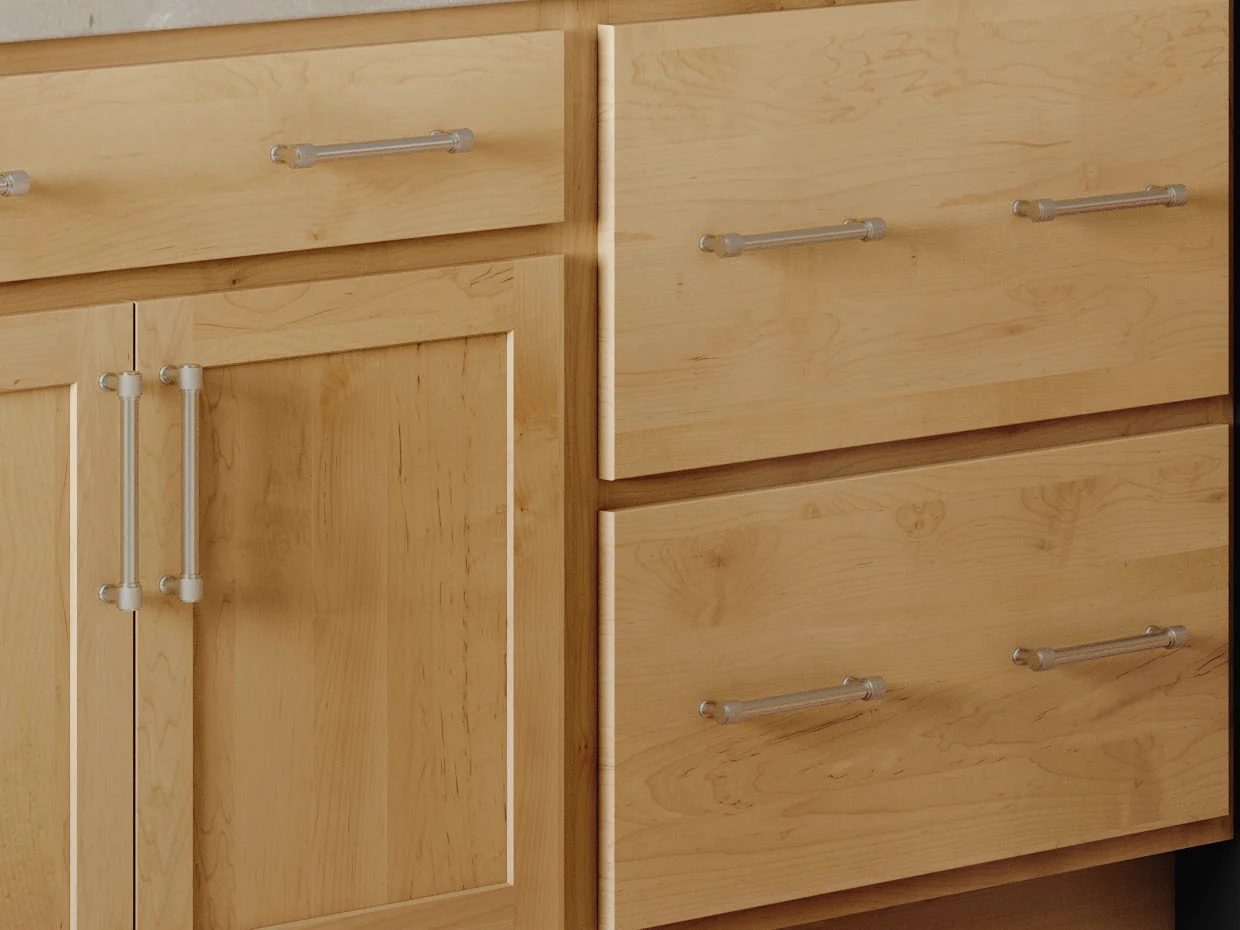
Real kitchen inspiration Fabuwood Allure, photographed in a finished kitchen. The separate 3D model explains cabinet construction; it does not reproduce this room or its finishes. Explore Fabuwood
Educational illustration based on the Cabinet Guide V4 interaction reference. Neutral physically based materials, not calibrated manufacturer textures. Hardware and joinery are simplified; no exact SKU, load rating or brand compatibility is implied. The illustration palette is separate from finish/program interest in the room planner.
The Seven Criteria + Warranty
01 of 8
Box Construction
What is the cabinet box made from, and how is it joined?
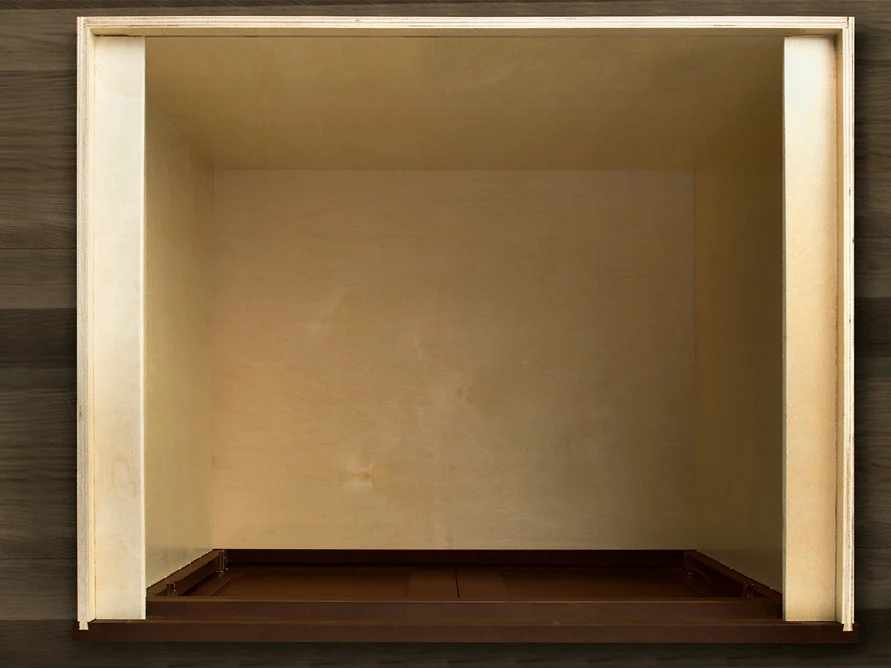
Same view, drawn and real·The cut edge of the box panels
How Better is builtTeaching drawing, not a product.
Closest real exampleFabuwood. A plywood box, seen from the front. Allure and Quest build their sides from ½-inch plywood.
Plywood is thin layers of wood glued with the grain crossing, so it holds screws and shrugs off moisture. Dado and rabbet joints are grooves and notches cut so one panel locks into the next instead of relying on staples. EFB (engineered furniture board) is a dense panel made from wood fibers, and click-lock joints snap the panels together.
Examples we carry+
Allure and Quest 1/2-inch plywood · Ovela and StarMark 3/4-inch plywood · Illume 3/4-inch EFB click-lock.
Pictured: an open Fabuwood plywood cabinet box, a photo from Fabuwood's vanity brochure.
A representative example: the tiers are a teaching scale, and each brand builds its own way.
02 of 8
Frame Type
Is it framed, frameless, overlay, or inset?
Same view, drawn and real·A drawer front over a door, straight on
How Better is builtTeaching drawing, not a product.
Real exampleMantra Omni. Full overlay: the drawer front and doors cover the frame, with a thin gap between them.
Better
$$$Moderate relative price impact
Compared with the other two tiers on this card.
Full overlay framed, or frameless European.
Cleaner face, more interior space; frameless gains about 15% inside.
Learn why+
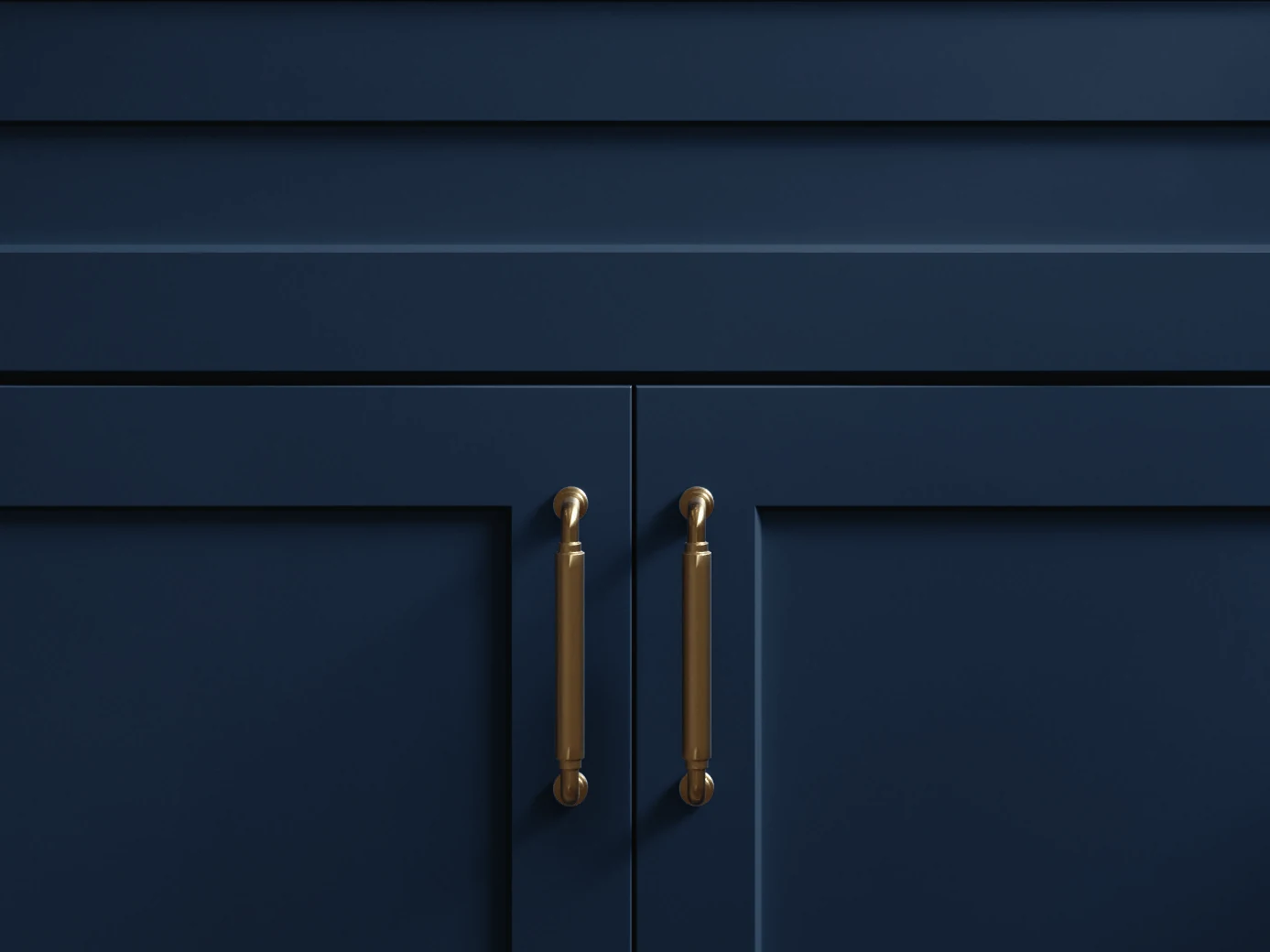
A face frame is the solid wood frame across the front of a framed cabinet. Overlay is how much of that frame the door covers: partial overlay leaves more frame showing, full overlay covers most of it. Inset doors sit inside the frame, flush with it. Frameless (European) cabinets have no face frame, so the openings are wider.
Pictured: Mantra Omni in Admiral, a close-up from Mantra's brochure.
A representative example: the tiers are a teaching scale, and each brand builds its own way.
03 of 8
Door and Drawer
How are the doors and drawer boxes built?
Same view, drawn and real·The corner of the drawer box
How Better is builtTeaching drawing, not a product.
No line we carry builds it this way.
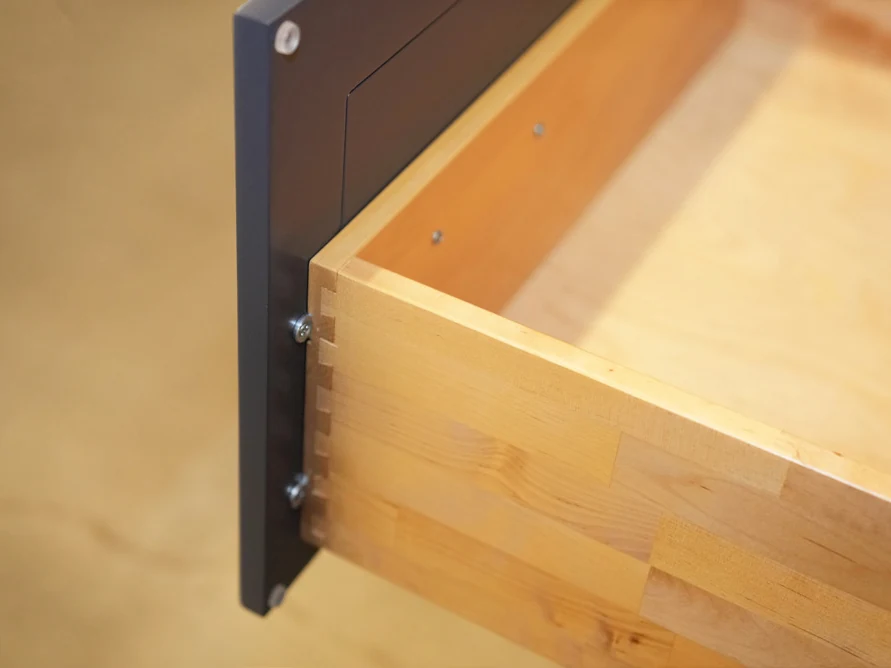
The nearest is Mid Continent Pivot: laminate-wrapped PureStyle doors, over solid hardwood dovetail drawers.
Real exampleFabuwood. A solid wood dovetail drawer, as on Allure, Ovela and Quest: the corner joints interlock.
Better
$$$Moderate relative price impact
Compared with the other two tiers on this card.
Five-piece door, solid wood dovetail drawer.
The floating panel breathes; the dovetail grips tighter the harder you pull.
Learn why+
A five-piece door is four frame pieces around a center panel. Dovetail joints are interlocking corners that resist being pulled apart. Mortise and tenon (M&T) is a peg-in-socket joint for door frames. HDF is high-density fiberboard, and MERIVOBOX is Blum’s metal drawer system.
Examples we carry+
Value Premium HDF five-piece · Allure solid wood frames · Illume MERIVOBOX metal · StarMark all-hardwood M&T.
Pictured: a Fabuwood drawer, a photo from Fabuwood's vanity brochure.
A representative example: the tiers are a teaching scale, and each brand builds its own way.
04 of 8
Slides and Hinges
Do the moving parts close well and adjust cleanly?
Same view, drawn and real·A drawer pulled open
How Better is builtTeaching drawing, not a product.
Every line we carry closes softly.
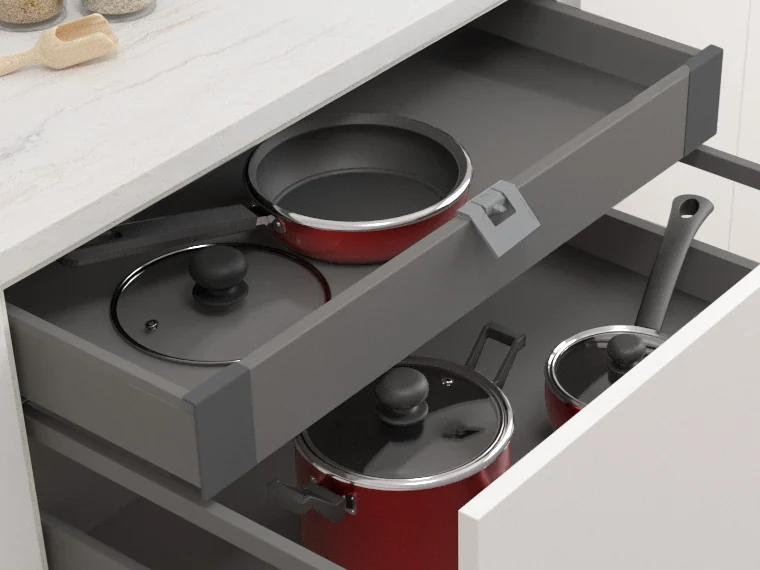
None runs on basic ¾-extension slides. The shortest reach is Fabuwood Quest, whose drawers open about 80 percent.
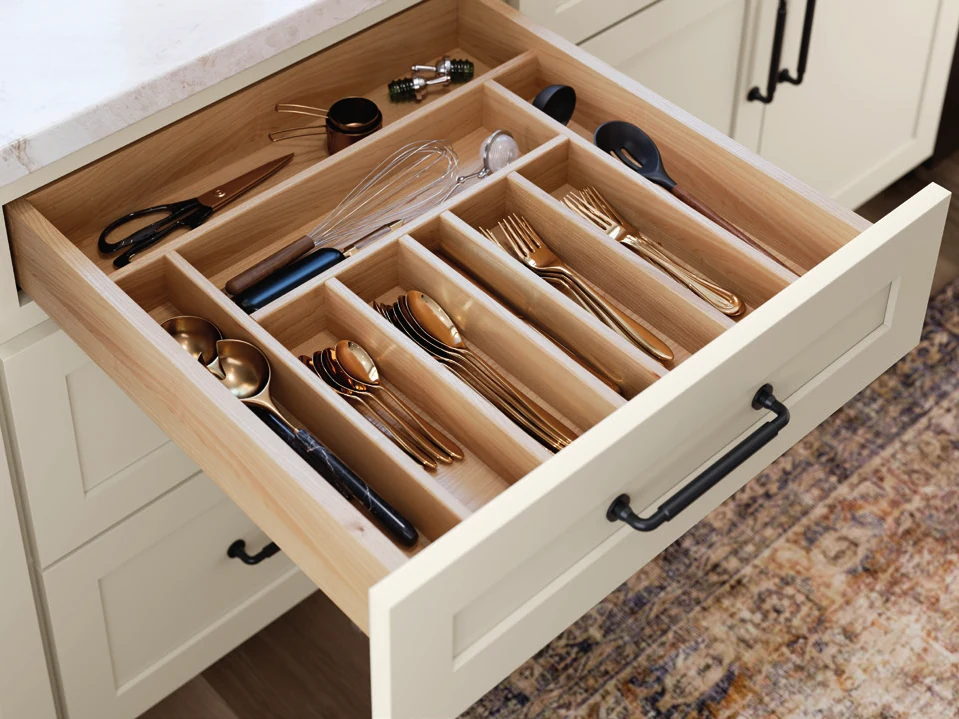
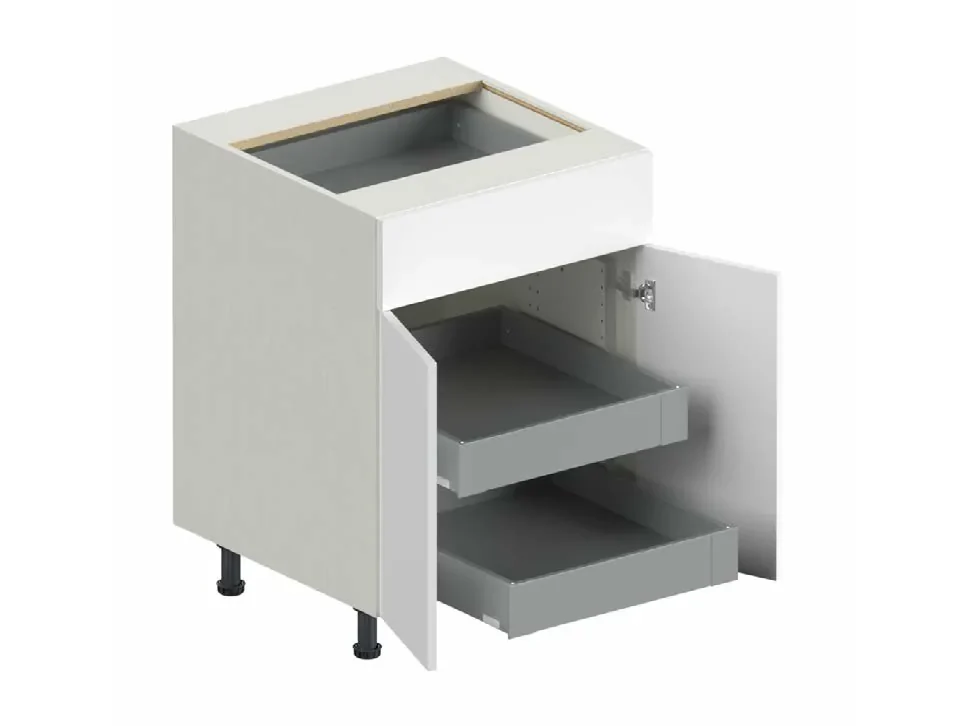
Real exampleMantra. The drawer comes all the way out, so the back row is as easy to reach as the front. Its undermount guides stay hidden underneath and close it softly.
Full extension means the drawer comes all the way out, so you can reach the back. Undermount slides are hidden under the drawer. Soft close slows a door or drawer at the end so it never slams. A 6-way hinge adjusts in six directions so the doors stay lined up.
Examples we carry+
Every line in our showroom includes soft close standard. Quest runs 80% extension; all other lines full extension.
Pictured: a Mantra drawer with a cutlery insert, from Mantra's brochure.
A representative example: the tiers are a teaching scale, and each brand builds its own way.
05 of 8
Shelving
Will the shelves stay flat under real use?
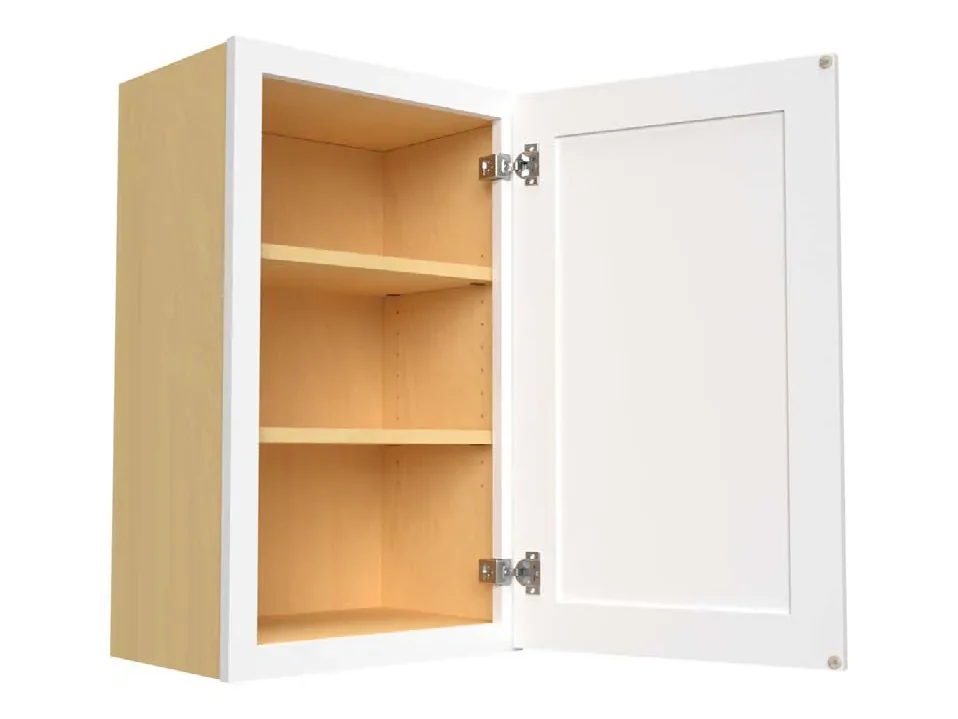
Same view, drawn and real·An open wall cabinet: shelves and clips
How Better is builtTeaching drawing, not a product.
Closest real exampleFabuwood Illume. Metal clips, under ¾-inch engineered-board shelves.
Better
$$$Moderate relative price impact
Compared with the other two tiers on this card.
5/8-inch plywood, metal clips.
Holds real kitchen loads, adjustable positions.
Learn why+
Shelf clips are the small supports an adjustable shelf rests on; metal clips carry more weight than plastic ones. A thicker shelf bows less under heavy dishes.
Examples we carry+
Quest 5/8-inch plastic clips · Allure 3/4-inch plywood metal clips · Ovela 3/4-inch, 22 inches deep in base.
Pictured: Fabuwood Illume, a render from Fabuwood's Illume spec book.
A representative example: the tiers are a teaching scale, and each brand builds its own way.
06 of 8
Base and Support
How is the cabinet leveled and protected at the floor?
Same view, drawn and real·Where the base cabinet meets the floor
How Better is builtTeaching drawing, not a product.
No line we carry ships metal leveling legs.
The nearest: StarMark's enclosed 4-inch toe kick with matching trim, and Ovela's plywood toe kick built into the box.
Real exampleFabuwood Illume. Adjustable furniture feet level the cabinet; the toe kick clips on.
Better
$$$Moderate relative price impact
Compared with the other two tiers on this card.
Adjustable leveling legs, clip-on toe kick.
Quick, precise leveling on uneven floors: the frameless standard.
Learn why+
The toe kick is the recessed strip at the floor that gives your feet room at the counter. Leveling legs are adjustable feet that let the cabinets sit level on an uneven floor.
Examples we carry+
Illume adjustable furniture feet and clip-on kick · Ovela recessed plywood toe kick · StarMark enclosed 4-inch kick.
Pictured: Fabuwood Illume, a render from Fabuwood's product images.
A representative example: the tiers are a teaching scale, and each brand builds its own way.
07 of 8
Materials and Finishes
What is the visible finish, and how should it be cared for?
Same view, drawn and real·The finish, as printed samples
How Better is builtTeaching drawing, not a product.
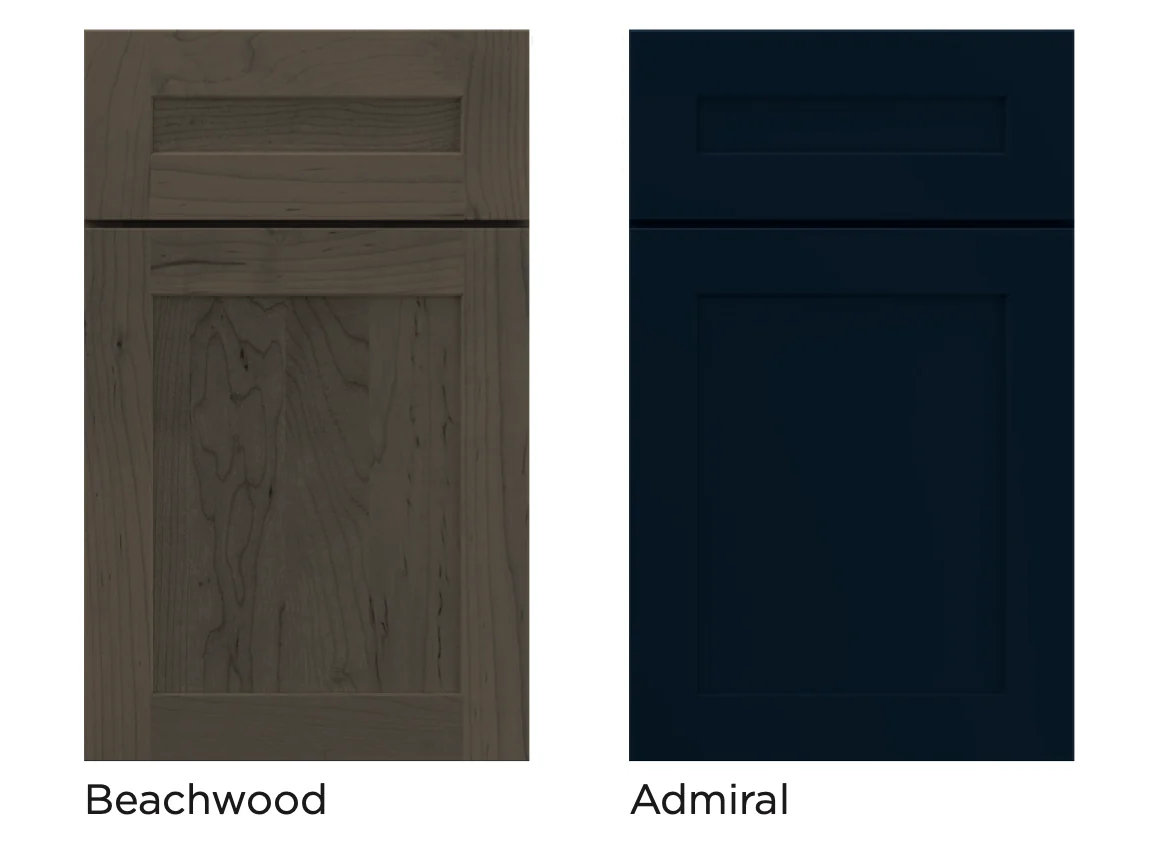
Real exampleMantra Omni. Beachwood is a stain that lets the maple grain show; Admiral is a painted color.
Better
$$$Moderate relative price impact
Compared with the other two tiers on this card.
Factory paint or stain.
Any look from bold color to natural grain; durable and wide choice.
Learn why+
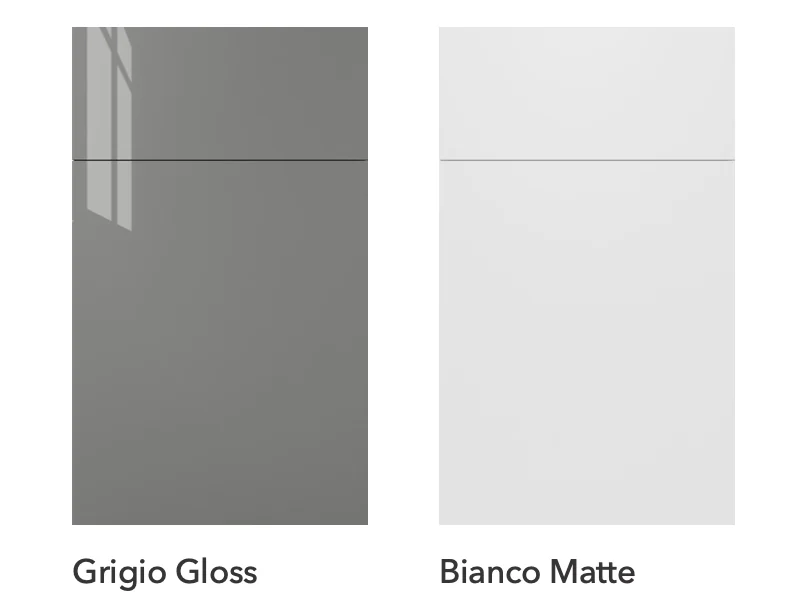
Foil (thermofoil) and melamine are thin surfaces bonded to a panel. Catalyzed lacquer is a factory finish cured into a hard coat. Acrylic is a tough plastic face, made in gloss or matte.
Examples we carry+
Verified: Illume Pro Touch matte is anti-fingerprint and self-repairs light surface scratches. A spec, not marketing.
Pictured: Mantra Omni samples, Beachwood and Admiral, from Mantra's brochure.
A representative example: the tiers are a teaching scale, and each brand builds its own way.
08 of 8
Warranty
What written coverage applies to this exact line?
Same view, drawn and real·The warranty, as the maker prints it
How Better is builtTeaching drawing, not a product.
We file the claim for you.
On every line we sell, Bay State Kitchen Gallery files warranty claims on your behalf, so you never chase a manufacturer.
Real exampleMid Continent. A limited lifetime warranty, as Mid Continent prints it.
Better
$$$Moderate relative price impact
Compared with the other two tiers on this card.
Limited lifetime.
For as long as the first owner lives in the home. Most of our lines carry this.
Learn why+
Limited means the manufacturer lists what is covered and what is not. Your designer gives you each line’s written terms before you order.
Examples we carry+
Every claim on every line we sell is filed by Bay State Kitchen Gallery on your behalf. Ovela warranty confirmed at time of quote.
Pictured: Mid Continent's warranty mark, from its brochure.
A representative example: the tiers are a teaching scale, and each brand builds its own way.
You now speak cabinet.
Next: every line we carry, scored on these exact seven criteria.
The drawings are our own teaching drawings. The photos, renders and samples are from our manufacturers’ own catalogs and brochures.
Compare Our Lines
Find the right fit for your kitchen.
Choose two cabinet lines below. Compare the look, construction and finish options, then take your preferred line into the 3D planner. There is no single best brand; the right choice depends on your room and priorities.
1 / 2
Mantra Omni in Admiral
Mantra
A focused framed cabinet line with two Shaker door styles and a short, practical selection path.
Construction: Framed. Omni doors are full overlay (they cover most of the frame); Classic doors are partial overlay (more of the frame shows).
The semi-custom introduction: the most popular door styles and finishes at an approachable price, including the PureStyle laminate-wrap doors for a high-durability painted look.
Construction: Framed. Depending on the door style, partial overlay (more of the frame shows) or full overlay (the doors cover most of the frame).
Doors and rooms are manufacturer photographs; cabinets are shown as drawn in each manufacturer’s own catalog. Confirm your exact door and finish with showroom samples.
Compare construction, materials & warranty
Rows marked Different are where these two lines differ. Grey rows are the same for both.
Explore the full collections, including additional cabinet series and full-custom options. Explore all brands.
More choices to explore with your designer
Fabuwood Quest: A value-priced framed series that keeps the lifetime warranty at a lower price with an 80-percent drawer extension and plastic shelf clips. Explore Fabuwood
Fabuwood Value Premium: Fabuwood's entry series, one door style in one color, with glass door sets and appliance garages available to dress it up. Explore Fabuwood
Fabuwood Valencia: A vanity-only inset series, not a kitchen line, with furniture feet and matching quartz-look tops. Explore Fabuwood
Europa UltraLux: Ultra-contemporary acrylic or PET laminated to an MDF core, offered in high-gloss and UltraMatte finishes; Dry Erase certified. Explore Europa
Elleganza: Full-custom cabinetry drawn and built to fit a specific room rather than selected from a fixed catalog. Full custom has no fixed catalog, so it is not compared line by line here; a designer develops it with you. Explore Elleganza
Your kitchen, every line, one screen
See your kitchen, cabinet by cabinet.
Pick your room’s shape, set the walls and choose a cabinet line. We lay out a complete kitchen for you, and your designer confirms pricing at your showroom visit.
Drag to turn the room. Use + and − to zoom.
Illustrative kitchen layout: the door shape and color are approximate, and appliances are simple shapes. See the real door and finish in our showroom.
Choose your cabinet line
Door and finish
Finish color shown is approximate. See real samples in the showroom.
Your door and finish.
Options come from the current catalog; some are programs or material families, not individual colors. Series compatibility and actual samples need showroom confirmation. Manufacturer texture maps are not yet connected.
Book a consultation and this plan goes with your request. Saving is optional.
Saving or sharing sends nothing to the showroom.
Cabinet listEvery cabinet in your room, by size
The cabinets drawn in your room, by size.
1 × Corner base 39 · blind corner base with lazy susan39 × 24 × 34 1/2 in · Wall A / Wall B corner
1 × Sink base 36 · sink base36 × 24 × 34 1/2 in · Wall A
2 × Drawer base 12 · 3-drawer bases12 × 24 × 34 1/2 in · Wall A
1 × Base 33 · base cabinet33 × 24 × 34 1/2 in · Wall B
1 × Pantry 24 · tall pantry cabinet24 × 24 × 90 in · Wall B
1 × Corner wall 24 · corner wall cabinet24 × 24 × 30 in · Wall A / Wall B corner
1 × Wall 33 · wall cabinet33 × 12 × 30 in · Wall B
1 × Wall 27 · wall cabinet27 × 12 × 30 in · Wall A
1 × Wall 21 · wall cabinet21 × 12 × 30 in · Wall A
1 × Wall 12 · wall cabinet12 × 12 × 30 in · Wall A
6 × Filler · filler strips, cut to fit1 1/2, 1 1/4, 3 in wide · Wall A, Wall B
In your room: one blind corner base with lazy susan, one sink base, two 3-drawer bases, one base cabinet, one tall pantry cabinet, one corner wall cabinet, four wall cabinets and six fillers. Your designer finalizes every cabinet, size and filler with you.
About 3 inches along your walls are open between cabinets. Your designer fills them with fillers or panels.
Your final Proposal confirms the exact cabinets, sizes, door, species and finish, any modifications, fillers and panels, and the price.
Fine-tune individual cabinets (optional)
The kitchen is planned for you automatically. Your designer finalizes every cabinet with you; change sizes here only if you want to. Editing here stops the automatic layout until you press “Plan my kitchen automatically”.
Base 30 · 30 × 24 × 34 1/2 in W × D × H
Size details
Widths are the line’s standard sizes; depth and height are its standard ones. The door and drawer layout in the room view is illustrative.
Pricing for your exact cabinets is confirmed with your designer at your showroom visit.
Your selected cabinets
Adjust quantities or choose a wall for each cabinet. Pieces that don’t fit stay in your list so you can revise the layout with a designer.
Corner base 39 #1 · 39 × 24 × 34 1/2 in Wall A / Wall B corner · automatic · 1-door front · generic
Corner wall 24 #1 · 24 × 24 × 30 in Wall A / Wall B corner · automatic · 1-door front · generic
Sink base 36 #1 · 36 × 24 × 34 1/2 in Wall A · 70 3/4 to 106 3/4 in · automatic · 2-door front · generic
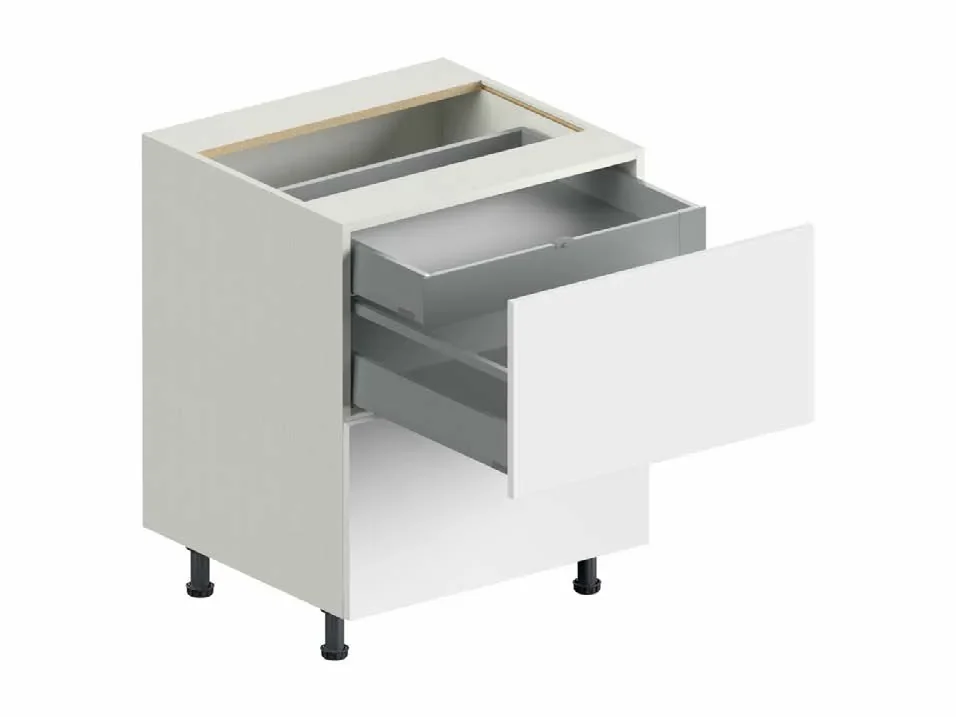
Drawer base 12 #1 · 12 × 24 × 34 1/2 in Wall A · 15 1/4 to 27 1/4 in · automatic · 3-drawer front · generic
Drawer base 12 #2 · 12 × 24 × 34 1/2 in Wall A · 57 1/4 to 69 1/4 in · automatic · 3-drawer front · generic
Pantry 24 #1 · 24 × 24 × 90 in Wall B · 36 to 60 in · automatic · 2-door front · generic
Base 33 #1 · 33 × 24 × 34 1/2 in Wall B · 60 to 93 in · automatic · 2-door front · generic
Wall 27 #1 · 27 × 12 × 30 in Wall A · 0 to 27 in · automatic · 2-door front · generic
Wall 12 #1 · 12 × 12 × 30 in Wall A · 57 1/4 to 69 1/4 in · automatic · 1-door front · generic
Wall 21 #1 · 21 × 12 × 30 in Wall A · 106 3/4 to 127 3/4 in · automatic · 2-door front · generic
Wall 33 #1 · 33 × 12 × 30 in Wall B · 60 to 93 in · automatic · 2-door front · generic
Every cabinet placed in your room is part of your plan. Your designer confirms pricing for them at your showroom visit.