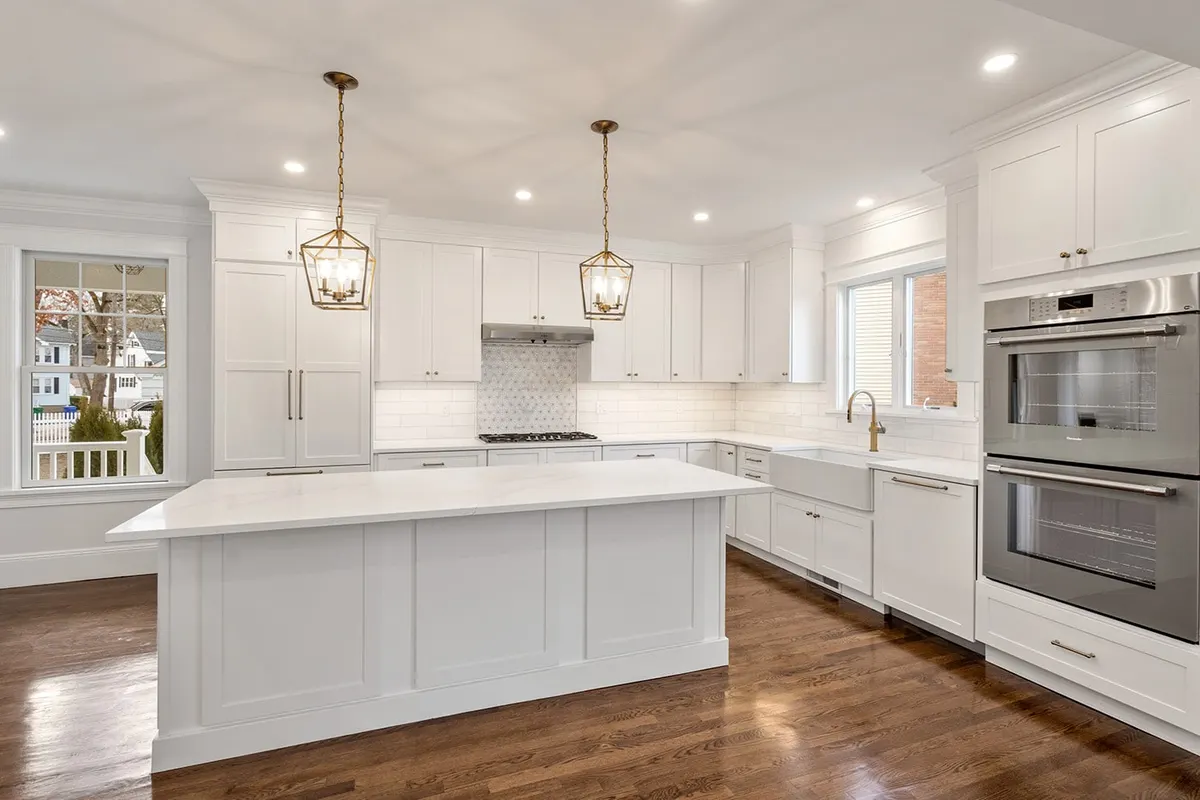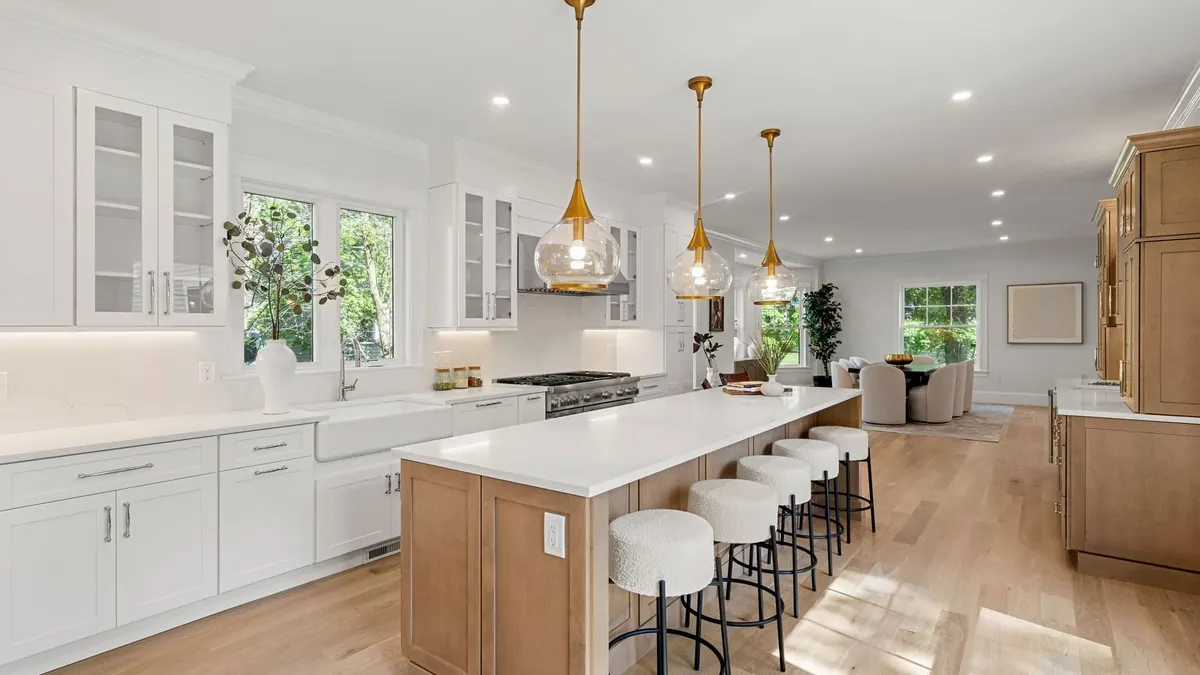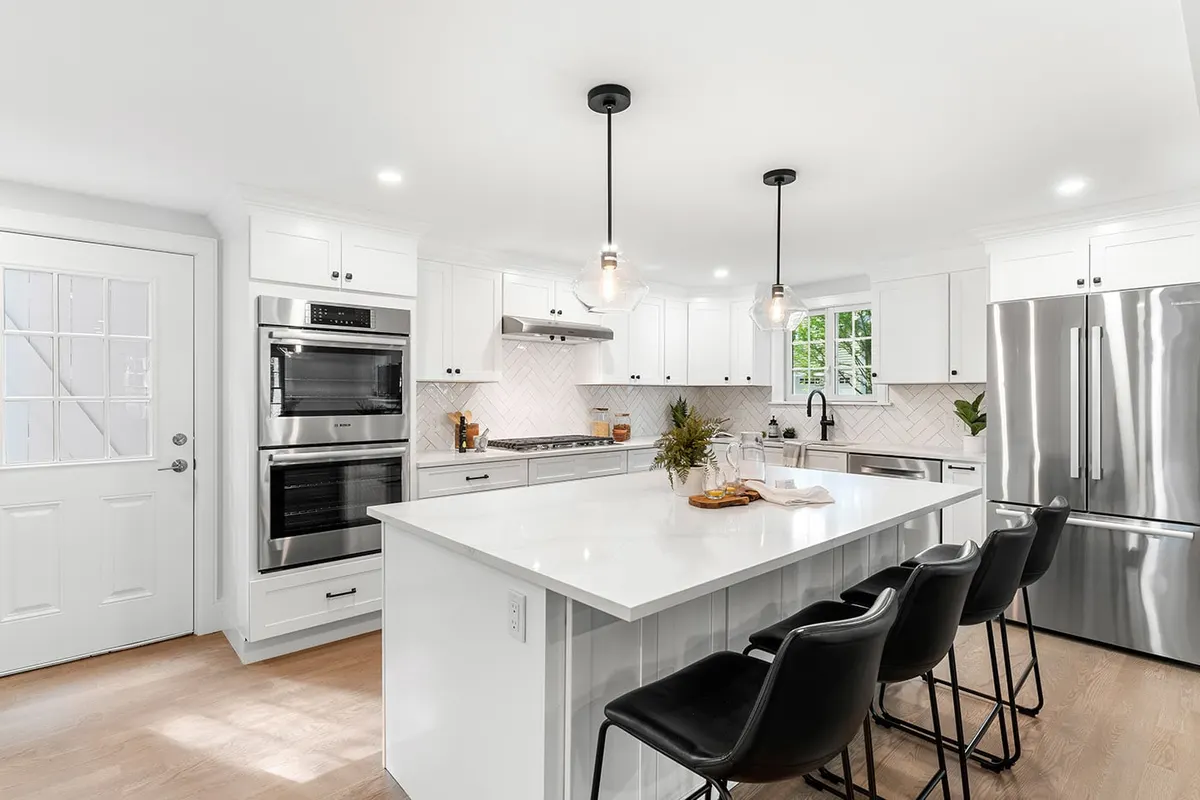
A typical Greater Boston kitchen remodel in 2026 lands between eighty thousand and one hundred sixty thousand dollars. That is a wide range, and homeowners coming in for a first consultation usually want to know why it is so wide and where their project is likely to sit. The honest answer is that the range is driven by five cost centers, and each one can swing twenty thousand dollars up or down depending on decisions the homeowner makes. Here are the five, with real numbers from projects we have run in the last two years.
Cabinets: the single biggest line
Cabinetry runs thirty to forty-five percent of the total. A ten-by-twelve kitchen in Fabuwood Galaxy Horizon with a standard signature color lands around twenty-four thousand installed. The same kitchen in Valencia inset runs thirty-two to thirty-eight. The same kitchen in StarMark custom inset with a non-standard stain runs forty-two to forty-eight. The door and the line set the floor; the color, the hardware, and the custom options set the ceiling.
Countertops: a smaller line than people think
Countertops are usually eight to fifteen percent of the total. A ten-by-twelve kitchen uses roughly fifty to sixty square feet of slab. Cambria quartz runs eighty-five to one-ten per square foot installed. A three-cm marble runs one-thirty to one-sixty. A soapstone runs one-forty to one-ninety. The math lands in the five-to-twelve thousand range for most Greater Boston kitchens. It is not the line to cut to save budget — the slab is the surface you touch daily — but it also is not the line most of the money goes to.
“The range is driven by five cost centers. Each one can swing twenty thousand dollars.”
Labor: the line that drifts
Install labor, plumber, electrician, tile setter, painter, and the project lead run twenty to thirty percent of the total. A standard kitchen with no structural work runs about fifty-five to seventy labor hours for install, plus ten to fifteen plumbing hours, ten to twenty electrical hours, twelve to twenty tile hours, and twenty project-management hours. At Greater Boston rates, that totals between twenty-two and thirty-five thousand on a mid-sized kitchen. Structural work — wall removal, floor patching, ceiling work — adds five to fifteen thousand on top.
Appliances: the line homeowners own
Appliances are ten to twenty percent of the total. A range, wall oven, fridge, dishwasher, hood, and microwave package lands at eight thousand in a value tier, sixteen thousand in a mid tier with a Bosch or KitchenAid package, and thirty-plus thousand in a Wolf-and-Sub-Zero tier. This line is yours to run — we can recommend but we do not sell appliances. Most of our Greater Boston projects come in around fourteen to eighteen.
Tile, fixtures, paint, and the small lines
Backsplash tile runs one to three thousand, faucet and disposal run seven hundred to three thousand, paint runs two to four thousand, and lighting runs one to four thousand. Each of these is small in isolation. Together they total six to fifteen thousand, and this is the pool that usually absorbs the small decisions that come up during the project.
The hidden line: permits, contingency, and the punch list
Most estimates leave out a permit line, a ten-percent contingency, and the final punch list. A building permit in most Greater Boston towns runs three to five hundred for a kitchen without structural work, eight hundred to fifteen hundred with structural. The ten-percent contingency is not a surcharge — it is the money set aside for the things found behind the walls that are honestly impossible to price from a site visit. Old knob-and-tube behind a cabinet run, a rotten subfloor around the old dishwasher, a cast-iron drain stack that needs to come out. Unspent contingency comes back to the homeowner at final. The punch list is the last walk, the small fixes — a cabinet door that needs a hinge adjustment, a piece of trim that needs a coat of paint. It is usually five hundred to two thousand.
How to land where you want to land
Tell us the number you want to stay under in the first visit. We will come back with a scope that fits it. If the number is eighty-five and you want to see a Wolf range on the drawing, we will tell you that and show you what has to give. If the number is one-sixty and you want the Valencia inset line, we will tell you that works and where the line items sit. The worst version of a kitchen project is one where the number shifts quietly during the work. Every one of our projects lands in the range the first page of the proposal sets.