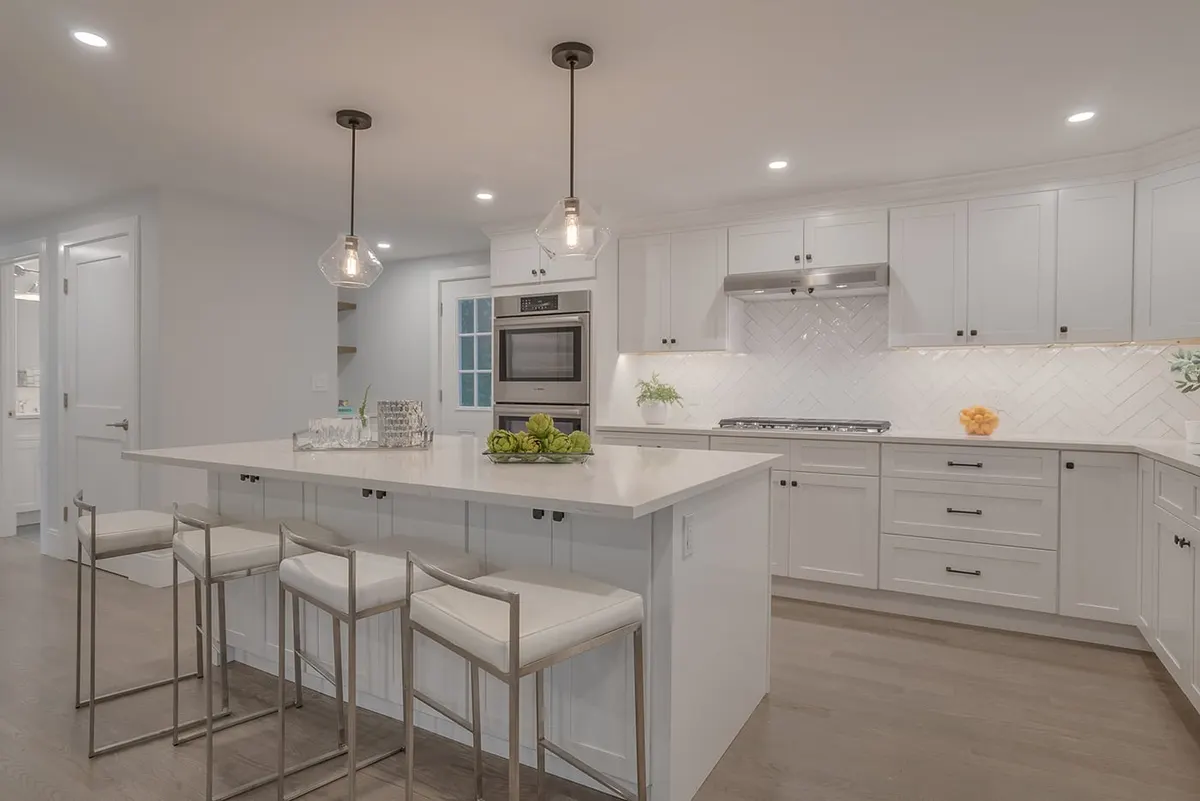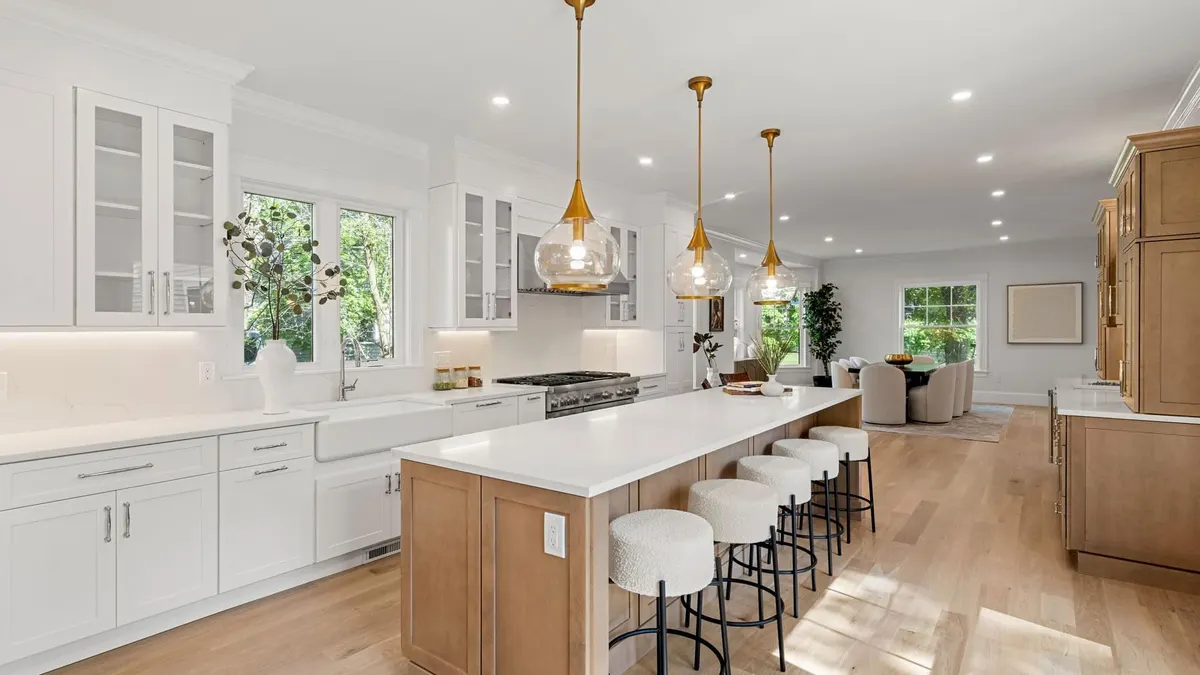
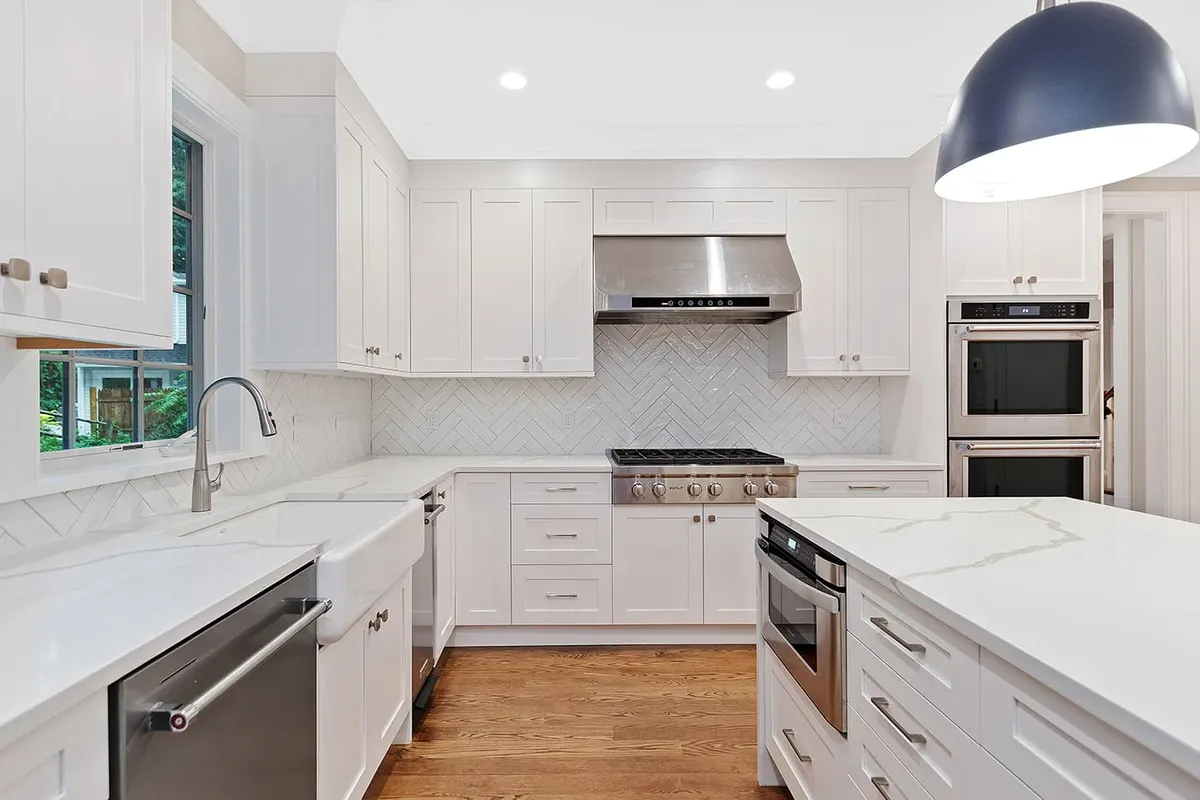
Every kitchen project runs into the same question in the first month: what door style do we want? The answer quietly runs the rest of the decisions. It sets the cabinet line, limits the paint-and-stain library, shapes the hardware choices, and decides whether you will be looking at beaded inset beading or a flat slab every morning for the next fifteen years. We get it wrong more often than any other specification, because it is the only part of the kitchen that cannot be quietly changed after the install.
The short list most Greater Boston kitchens end up picking from is this: five-piece shaker, flat slab, beaded inset, traditional raised-panel, and a handful of transitional variations that sit between shaker and slab. We carry each of these across the five lines in our showroom. Fabuwood Allure and Galaxy cover shaker and slab. Fabuwood Illume is our European frameless slab line. Fabuwood Valencia and StarMark both carry inset in framed construction. Mid Continent's Signature door covers the traditional end of the library.
Start with how the rest of your house reads
Door style works best when it does not argue with the rooms on either side. A 1920s center-entrance colonial with plaster ceilings, picture rail, and stained trim almost always wants a painted shaker or a beaded inset. A 1970s raised ranch with stained oak casing and brushed steel fixtures can take a flat slab in a warm oak veneer without anyone noticing the kitchen is two generations newer than the rest of the house. We have specified flat slab kitchens in colonials before and they read as a choice, not a mistake; but the rest of the kitchen has to earn the contrast.
Before we show you door samples, we ask two questions. What year was the house built, and what other rooms have you remodeled. The answers usually rule out half the shortlist before we have opened a catalog.
“Door style is the only part of the kitchen that cannot be quietly changed after the install.”
Think about what shows dirt and what hides it
Flat slab doors show everything: fingerprints, dust, a wet dishcloth mark. The tradeoff is they wipe clean in one pass. Five-piece shaker doors have a horizontal ledge at the rail where the stile meets the panel, which catches dust. Beaded inset has the beading and the face-frame gap, which catches more. If nobody in the house is willing to wipe down cabinets monthly, a shaker with a tall, narrow panel is a quiet compromise; the ledge is short enough that it does not collect much, and the profile still reads traditional.
Color matters here too. Warm off-whites hide kitchen life better than cool whites. A flat slab in a warm off-white with a matte lacquer finish is easier to live with than the same door in a high-gloss cool white, which will show every water drop. We will show you the difference in the showroom under real light.
Match the door to the hardware you already want
If you already know you want a brushed-brass cup pull and a matching knob on every door, that narrows the door style. A cup pull wants a flat drawer front or a slab drawer, not a five-piece drawer. A deep shaker panel reads well with a bar pull, less well with a cup pull. If you want a clean contemporary bar pull, a flat slab or a narrow shaker with a quarter-inch panel reveal is the match. We work backwards from the hardware more often than clients expect.
One last test before you sign
Take the sample door home for a weekend. Put it on the kitchen counter next to the existing trim, the existing floor, and the hardware finish you are planning. Look at it at eight in the morning and at six in the evening. Most clients who do this catch one thing they would have missed in the showroom under our warm lighting, and they catch it before the order goes in. That weekend saves more money than any other thirty-six hours in the project.