
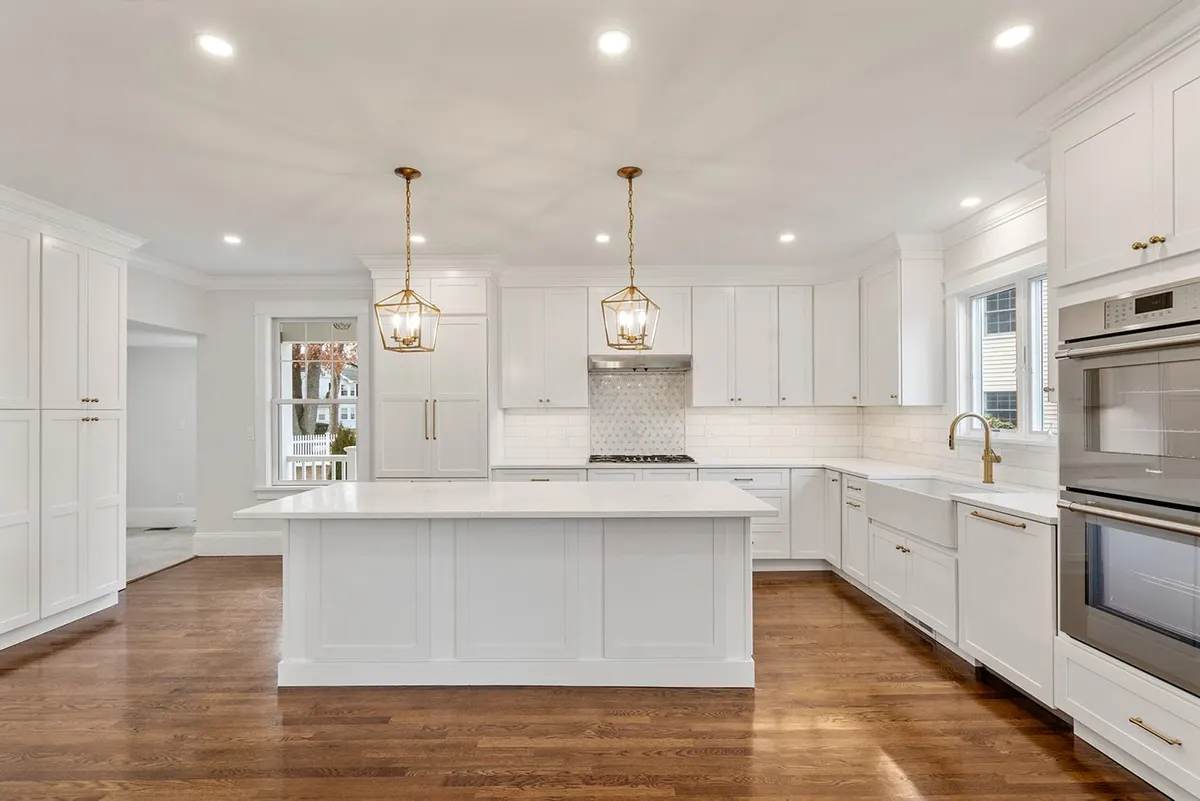
The names are similar enough that the confusion is genuinely common. Homeowners regularly walk into kitchen showrooms asking about quartz countertops and walk out having ordered quartzite, or vice versa. The problem is that these are fundamentally different materials with very different maintenance requirements, durability profiles, and costs. Confusing them before purchase leads to either pleasant surprise or genuine disappointment once the kitchen is in use.
This guide gives Waltham homeowners a complete, accurate explanation of the difference between quartz and quartzite, how each material performs in an active kitchen, what they cost in the Massachusetts market, and how to choose the right one for your specific kitchen renovation. Bay State Kitchen Gallery provides both materials and helps homeowners make this choice with full information at every consultation in our Waltham showroom.
What They Are: The Fundamental Difference
Quartz Countertops
Quartz countertops are an engineered material. They are manufactured by combining approximately 90 to 95 percent ground natural quartz aggregate with polymer resins, pigments, and sometimes recycled materials. The result is a slab that looks like natural stone but is produced in a factory to consistent specifications. The patterns, colours, and veining in engineered quartz are designed by the manufacturer to achieve specific aesthetic effects.
Because quartz countertops are engineered rather than quarried, they are non-porous. No sealing is required at installation or at any point during the countertop’s service life. The surface resists staining from wine, coffee, oils, and most kitchen substances because liquids cannot penetrate the material.
Quartzite Countertops
Quartzite is a natural stone formed when sandstone is subjected to high heat and pressure deep within the earth over millions of years. The resulting material is extremely hard and dense, with natural veining and variation that cannot be replicated by an engineered product. Each quartzite slab is unique, with movement and character that comes from geological processes rather than manufacturing decisions.
Because quartzite is a natural stone, it is porous to varying degrees depending on the specific quarry and formation. Most quartzite countertops require sealing at installation and periodic re-sealing thereafter, though high-quality quartzite sealed properly can perform very well in kitchen environments.
The Confusion with Marble
An additional complication in this category is that some materials sold as quartzite are actually marble, and some sellers do not clearly distinguish between the two. A simple test: a genuine quartzite countertop should not etch (develop a surface dullness) when acidic substances like lemon juice or vinegar are applied. If a sample etches easily, it is likely marble or a softer stone rather than true quartzite. This matters significantly because marble requires considerably more maintenance and care than either quartz or quartzite.
Quartz vs Quartzite: Side-by-Side Comparison
Performance in an Active Waltham Kitchen
Quartz in Daily Kitchen Use
Quartz excels in the maintenance-free daily kitchen environment. Coffee spills, tomato sauce, red wine, cooking oils: all can be wiped away without concern about staining because the non-porous surface does not absorb them. The consistent pattern means there are no unique areas that require special protection. The one genuine limitation of quartz is heat: placing a hot pan directly on a quartz surface can damage the resin binders and cause discolouration. Trivets are a simple and widely accepted solution. Our full countertop comparison guide covering quartz, granite, and marble provides additional context on how quartz performs relative to other natural and engineered stone options.
Quartzite in Daily Kitchen Use
A properly installed and sealed quartzite countertop in an active kitchen is a genuinely beautiful and durable surface. The natural variation in the stone, the dramatic veining, and the unique character of each slab create a kitchen that feels genuinely distinctive in a way that engineered surfaces cannot replicate. Quartzite also handles heat significantly better than quartz, which matters in kitchens where pots and pans frequently come off the cooktop.
The trade-off is maintenance commitment. Quartzite must be sealed at installation and the sealer needs to be renewed periodically, typically once every one to three years depending on the specific stone and usage. Acidic substances should be wiped up promptly rather than left to sit on an unsealed surface. Homeowners who are willing to engage with these maintenance requirements consistently are rewarded with a countertop that improves in character over time. Homeowners who prefer a surface that requires zero maintenance are better served by quartz.
Which Is Right for Your Waltham Kitchen?
The Naming Confusion You Must Avoid at the Showroom
When purchasing either material, ask the supplier directly: is this engineered quartz or natural quartzite? Do not rely on the product name alone because some products use names that do not clearly indicate which category they belong to. Engineered quartz products are manufactured by companies like Caesarstone, Cambria, Silestone, and MSI. Natural quartzite is a quarried stone sold under names that often reference the quarry or region of origin.
Bay State Kitchen Gallery clearly identifies every countertop material in our Waltham showroom and provides specific guidance on maintenance requirements and performance expectations for each slab before any decision is made. Avoiding the naming confusion is part of what we do at every consultation. For the broader context of how countertop material choices fit into the overall kitchen design system, our guide on white versus dark kitchen cabinets covers how surface material choices interact with cabinet colour and design direction.
See Both Materials in Person at Our Waltham Showroom
The difference between quartz and quartzite is one that photographs illustrate but cannot fully convey. The variation in natural quartzite, the specific surface texture of different engineered quartz products, and the way each material looks under your kitchen’s specific lighting conditions are all things that need to be experienced in person.
Bay State Kitchen Gallery carries both engineered quartz and natural quartzite samples in our Waltham showroom alongside cabinet and hardware selections so you can make a material decision with everything in view.
Schedule Your Free Countertop and Kitchen Design Consultation at Bay State Kitchen Gallery and see both materials side by side before you decide.
Frequently Asked Questions
Is quartz or quartzite better for a kitchen countertop?
Neither is universally better. Quartz is better for homeowners who want a zero-maintenance surface with broad stain resistance and consistent aesthetics at a lower price point. Quartzite is better for homeowners who value natural stone character, dramatic unique veining, and superior heat resistance, and who are willing to engage with periodic sealing requirements. Both are excellent materials when the right choice is matched to the right homeowner.
How do I know if a countertop is quartz or quartzite?
Ask the supplier directly and request clarity on whether the material is engineered quartz (manufactured with resin binders) or natural quartzite (quarried stone). You can also perform a simple acid test on a sample: apply a small amount of lemon juice to the surface for several minutes. True quartzite and quartz will not etch. Marble will develop a visible dull spot. Honest suppliers will identify the material category clearly without requiring you to test it.
Does quartzite require sealing and how often?
Yes. Most quartzite countertops require sealing at installation and periodic re-sealing every one to three years depending on the specific stone’s porosity and the level of kitchen use. A simple water test can indicate whether re-sealing is needed: if water drops absorb into the surface within a few minutes rather than beading up, it is time to reseal. Properly sealed quartzite performs very well in kitchen environments.
Why is quartzite more expensive than quartz?
Quartzite is quarried from specific geological formations, cut into slabs, and transported from the quarry to the fabricator. The natural variation in the stone and the limited availability of premium quartzite formations from countries like Brazil and Norway contribute to higher pricing. Engineered quartz is manufactured in a controlled process that allows for more consistent production at scale, which keeps costs lower while still delivering strong quality.
What does quartzite look like compared to quartz?
Quartzite typically has a more dramatic, flowing veining pattern with natural variation that differs across every slab. The movement in premium quartzite can be extraordinarily beautiful with sweeping veins of colour moving through a white or grey base stone. Engineered quartz can replicate many of these aesthetic qualities but the pattern tends to be more uniform and repeatable. For homeowners who want the specific look of a unique, unrepeatable natural stone surface, quartzite is the only way to achieve it.
Know What You Are Buying Before You Buy It
The quartz vs quartzite decision is one where clarity upfront prevents regret later. Both materials can make a beautiful, long-lasting kitchen countertop when chosen with full understanding of their differences. Quartz delivers ease and consistency. Quartzite delivers natural beauty and uniqueness. Bay State Kitchen Gallery helps Waltham homeowners navigate this choice with real samples, honest material guidance, and no pressure toward the higher-margin option. Contact us today to see both materials in our Waltham showroom.